2026 Influencer Marketing Predictions: What Trends Will Define the Creator Economy?

Explore five influencer marketing predictions for 2026, from niche comfort creators and AI-powered scale to hi-fi content, IRL activations, and creator advisors.
As influencer marketing matures, the playbook brands relied on just a few years ago is being rewritten. Audiences are more discerning, creators are more influential than ever, and brands are under more pressure than ever to prove impact.
Looking ahead to 2026, we see a clear shift in how brands approach creators, content, and community. Here are our top 5 predictions that will shape the next chapter of influencer marketing, and why we believe they’re accelerating now.
1. Brands will double down on niche comfort creators.
For years, influencer marketing leaned heavily on aspiration. Creators shared luxury hauls, extravagant vacations, and perfectly curated feeds, and audiences loved watching from the sidelines.
But consumer sentiment is shifting. As economic uncertainty grows and skepticism toward traditional advertising deepens, audiences are increasingly fatigued by overconsumption, overflowing PR closets, and creators who feel disconnected from everyday reality.
Looking ahead, we expect audiences to continue gravitating toward creators who feel familiar, trustworthy, and genuinely relatable. These are the ones they watch daily, take advice from, and see as their “comfort creator.”
As a result, brands will rethink what influence really means in 2026. Instead of chasing mass reach, they’ll increasingly prioritize niche creators in hyper-specific communities and customer-turned-creators who already use and love the product. While these creators may have smaller audiences, their influence runs deeper, rooted in trust, shared values, and long-term engagement.
We’re already seeing early signals of this shift. TikTok creator Ashton Moon (89K followers) recently posted that Sézane must have mistakenly sent her free product.
The brand quickly replied:
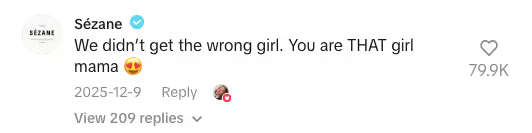
Audiences immediately praised the interaction, calling out how well Ashton’s values, storytelling, and aesthetic aligned with the brand.
In 2026, moments like this will be strategic. Brands will intentionally invest in creators who feel like a natural extension of their community, even if they don’t always deliver viral scale.
2. AI will power scale, but won’t replace creators.
As brands manage increasingly complex creator ecosystems, AI will become the operating layer behind influencer programs. From creator discovery and campaign optimization to content planning, creative testing, and performance measurement, AI-powered tools will help brands scale faster and operate more efficiently than ever before.
We’ll also see AI’s impact on paid media. AI-driven ad systems like Meta’s Andromeda analyze millions of ads and billions of data points in real time to deliver the right creative to the right audience at the right moment, dramatically improving performance and efficiency.
At the same time, the rapid rise of AI-generated content is raising the bar for originality. Many brands and creators are already facing audience pushback when AI content shows up in feeds, with comment sections often filled with criticism and demands for real content by real artists.
When anyone can produce content at scale (even fictional virtual influencers), what truly stands out is lived experience, personal taste, and compelling storytelling — areas where real human creators have a clear advantage.
In 2026, AI won’t replace talent. Instead, brands and creators will use AI to:
- Optimize both organic and paid performance
- Accelerate testing and learning cycles
- Free up time to focus on strategy, creativity, and storytelling
3. Hi-fi content will define brand moments.
Lo-fi content isn’t going anywhere as it remains essential for daily engagement and always-on social presence. But looking ahead to 2026, we predict brands will increasingly reserve their biggest launches and tentpole campaigns for high-production creator collaborations.
As social feeds grow more saturated, brands will require content that earns attention. Hi-fi creator content will become the go-to format for these moments, combining cinematic visuals, episodic storytelling, and editorial-style narratives that feel elevated without sacrificing authenticity.
We’re already seeing early signals of this shift. For example, Reformation’s fall collection launch with mega-creator Nara Smith (12.4M TikTok followers) centered on Followed, a cinematic short film that merges the brand’s signature aesthetic with Nara’s highly recognizable creator persona. Instead of reading like a typical influencer campaign, the film leans into editorial-style storytelling, elevated art direction, and moments of humor, all while subtly weaving in the brand narrative.
Creators are also leveling up in 2026. Many already operate like one-man production studios, capable of delivering high-quality storytelling that rivals traditional brand campaigns — all while still feeling native to social platforms.
In the year ahead, we expect hi-fi creator content to set the creative bar and define how brands show up for major launches and cultural moments that truly matter.
4. Brands will host a lot more influencer activations IRL.
Digital fatigue is real. Audiences, creators, and brands alike are craving real-world connection after years of screen-first engagement. In response, we predict 2026 will bring a significant rise in in-person influencer activations designed to create connection, exclusivity, and memorability.
From pop-ups and branded dinners to immersive community events and creator meet-ups, IRL moments will become a core part of influencer campaign strategy. These experiences give creators something tangible to rally around, while also providing brands with a powerful content engine. A single event can fuel weeks or even months of social storytelling across platforms, formats, and creators.
Beyond content, IRL activations deepen relationships. When creators experience a brand firsthand and build real connections with the people behind it, the resulting content feels more personal, more invested, and more authentic than a standard sponsored post.
Take Gymshark’s LIFT:LDN event, for example. The multi-day fitness festival brought Gymshark ambassadors and their fans together in real life for lifting challenges, athlete meet-and-greets, and more, creating a scalable content engine and stronger community connection.
In 2026, we expect many more influencer campaigns to start offline, and scale online from there.
5. Creators will become advisors, not just promoters.
Creators sit closer to consumer sentiment than any traditional research method ever could. Through comments, DMs, livestreams, and community interactions, they receive constant, unfiltered feedback in real time. In other words, they have the inside scoop into why consumers buy, hesitate, or churn.
Looking ahead to 2026, we predict brands will involve creators much earlier in the product and campaign lifecycle. Rather than bringing creators in at the final distribution stage, brands will tap them as strategic advisors, using their insights to shape decisions before a product ever launches.
Specifically, we predict creators will play a growing role in:
- Product ideation and feature feedback
- Packaging, messaging, and creative direction
- Go-to-market strategy, positioning, and launch planning
What this means for 2026
Together, these predictions reflect a broader shift in influencer marketing toward depth, intentionality, and long-term value. The future of influencer marketing will be defined by more trusted creator relationships, smarter use of AI to scale programs, and content strategies that balance authenticity with impact.
For a deeper look at the data behind these trends, stay tuned for our upcoming benchmark report, The State of Influencer Marketing 2026. We will be sharing new insights on how brands and creators are adapting, what is driving performance, and where the creator economy is headed next.
Ready to level up your campaigns this year? Book a demo to see how you can scale in 2026.