7 Creator Ad Hooks That Consistently Beat Brand Creative

Learn high-performing creator ad hooks that stop the scroll and drive better engagement and ROAS in paid social campaigns.
For years, performance marketers focused heavily on finding the right audiences, building lookalikes, and refining bid strategies were the primary ways to improve ad performance. But today, platforms like Meta and TikTok have automated much of that work, now handling targeting and optimization through increasingly sophisticated algorithms.
So what actually determines whether an ad wins or loses?
In 2026, the biggest differentiator in paid social performance comes down to creative — more specifically, the first few seconds of creative. On platforms like TikTok, Instagram Reels, and YouTube Shorts, users decide almost instantly whether to keep watching or keep scrolling. In fact, 71% of viewers decide within the first few seconds if a video is worth continuing. That means the opening moment of a video often determines whether an ad captures attention or gets ignored.
This is where creator content outperforms traditional brand creative. Creators are naturally skilled at grabbing attention in ways that feel native to the platform. Instead of polished intros or product-first messaging, they often open with curiosity, relatability, or an unexpected moment that makes viewers stop scrolling.
Across many paid campaigns, we’ve noticed that certain creator-style hooks consistently drive stronger engagement and ad performance. Here are 7 creator ad hooks that brands can use to capture attention and improve results in paid social ads.
1. The relatable moment
Example: “POV: you finally find jeans that actually fit a pear-shaped body.”
Relatable moments immediately signal to viewers that the content is meant for them. Instead of introducing the product right away, the creator starts with a situation many people recognize. That shared experience helps viewers feel understood and makes them more likely to keep watching.
This hook works especially well for products tied to everyday frustrations or niche needs, such as skincare concerns, body types, fitness goals, or lifestyle problems. By calling out a specific scenario, the creator quickly qualifies the audience and draws in the people most likely to care about the solution.
For brands, the key is to brief creators around real situations, rather than just product features. Ask them to start with a moment their audience would instantly recognize.
2. The demonstration
Example: “Watch this. This treatment instantly cancels out redness.”
Demo hooks work because they show the product in action right away. Instead of talking about benefits, the creator visually proves them in the opening seconds of the video.
This approach is particularly effective on short-form platforms where visual transformation or immediate results can stop the scroll. Viewers are naturally curious to see what happens next, which increases watch time and engagement.
Products that lend themselves well to demo hooks include beauty products, kitchen tools, gadgets, cleaning products, and anything with a visible result. When briefing creators, encourage them to start with the product working, rather than building up to the reveal later in the video.
3. The before-and-after
Example: “My hair before this leave-in conditioner vs. after.”
Before-and-after hooks spark curiosity because they promise a clear transformation. The viewer immediately wants to see the difference between the two results.
This format works well in paid ads because it communicates the product’s value quickly. Even if the viewer does not watch the entire video, the transformation is often visible within the first few seconds.
Beauty, fitness, home improvement, and cleaning products frequently perform well with this structure. The key is making sure the transformation is clear and easy to understand without needing a long explanation.
4. The secret hack
Example: “Here’s a shopping hack no one tells you about.”
Secret or “insider tip” hooks tap into curiosity and exclusivity. Viewers feel like they are about to learn something useful that most people do not know.
Creators often use this format when introducing products that solve a common problem in a new or unexpected way. It positions the product as part of a helpful tip rather than a traditional advertisement.
To make this hook effective, the tip needs to feel authentic and practical. Instead of focusing on promotional language, creators should frame the product as part of a useful discovery or routine.
5. The social proof
Example: “This product sold out four times, so I had to try it.”
Social proof hooks leverage the idea that if many people are buying or talking about something, it must be worth paying attention to. When viewers hear that a product is trending or repeatedly selling out, they become more curious to see why.
This hook works especially well for products that already have strong demand, viral momentum, or positive reviews. It also pairs well with unboxing content or first impressions, where the creator is trying the product for the first time.
In paid ads, social proof helps build credibility quickly, which can increase trust and improve click-through rates.
6. The unexpected opinion
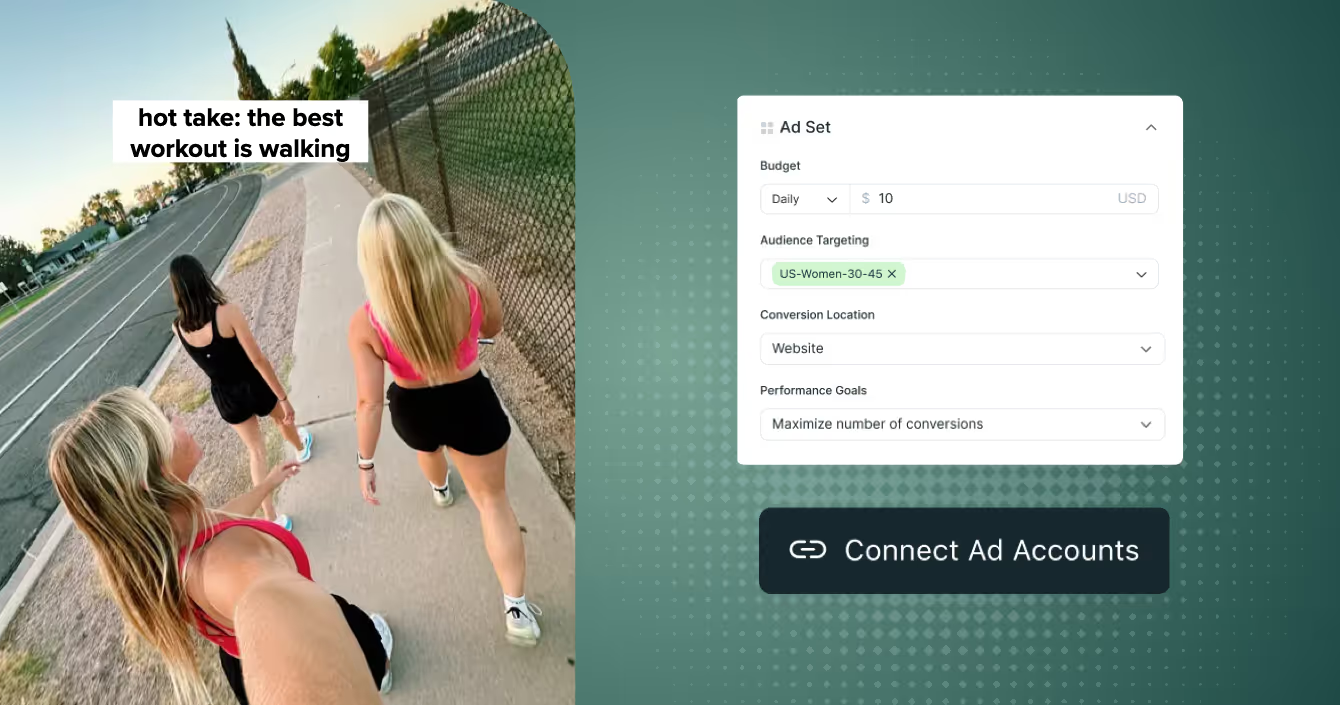
Example: “Hot take: most protein powders taste terrible.”
Unexpected opinions break the typical tone of brand advertising. Instead of immediately praising a product, the creator opens with a bold or contrarian statement that sparks curiosity.
Viewers are more likely to keep watching because they want to hear the reasoning behind the opinion. In many cases, the creator then introduces the product as an exception to the problem they just highlighted.
This approach works particularly well in categories where consumers are already skeptical, such as supplements, skincare, or tech products. Starting with an honest critique makes the content feel more authentic and less like a scripted ad.
7. The callout question
Example: “Are you still feeding your dog kibble?”
Callout question hooks immediately pull the viewer in by directly challenging a current behavior or assumption. Instead of passively introducing a product, the creator asks a question that makes the audience pause and reflect on what they are currently doing.
This works because it creates a small moment of tension. If the viewer answers “yes,” they are more likely to keep watching to see if there is a better alternative. The product is then introduced as the solution, making the transition feel natural rather than promotional.
This hook is especially effective for products that offer a clear upgrade or alternative, such as switching routines, replacing outdated solutions, or improving everyday habits. For brands, the key is to frame the question in a way that feels relevant and slightly provocative, without being overly negative or judgmental.
How to brief creators for stronger hooks
Now that you have a good idea of what a strong hook looks like, here’s how to write your campaign brief for attention and engagement.
- Start with the hook. Ensure creators are prioritizing the first 3 seconds with one of these scroll-stopping hooks (even before introducing the product).
- Give creative direction, not scripts. Creators perform best when they have the creative freedom to translate your message into their own voice. Overly scripted content removes the authenticity that makes these hooks work. Provide guardrails (not total guidance) by providing ideas like “Use a relatable scenario your audience experiences,” or “Lead with a before-and-after shot.”
- Encourage multiple hook variations. One of the biggest missed opportunities is only testing a single version of a video. Ask creators to film 2-3 different hooks per video with different angles or openings for the same concept. That way, your paid media team has more variations to test and improve the chances of finding a winner.
- Optimize for the platform. What works on your website or in a traditional ad often doesn’t work on short-form video. To create content that feels like it belongs in the feed, encourage creators to use socially native language like “POV” or “hot take” and follow platform-specific trends and formats.
- Prioritize authenticity over polish. Highly produced content isn’t always the highest-performing content. In many cases, lo-fi content, or ads that feel raw, honest, or even slightly imperfect, tend to outperform studio-quality creative because they blend in with organic content.
At the end of the day, what resonates is authenticity. Take time to understand how people consume content on each platform and give creators the flexibility to lean into that behavior.
If you need help with your paid strategy, get in touch to learn about how our team can help.