How to Segment Your Creator Program for Social Commerce at Scale

Learn how to segment affiliates, ambassadors, and UGC creators to scale social commerce, boost conversions, and reduce wasted spend.
Social commerce is projected to drive over $1.2 trillion in global revenue by the end of 2026, yet many brands still burn through their budgets running a one-size-fits-all creator program.
High-performing programs rely on careful segmentation of your creator roster, where affiliates, ambassadors, and UGC creators each play a distinct role in driving measurable ROI. By aligning specific creator types with the right stage of the buyer journey, you turn casual scrolling into targeted purchasing. But segmenting requires more upfront effort and careful management.
Let’s discuss how to segment your creator program to drive social commerce growth at scale.
Why Creator Segmentation Is the Foundation of Social Commerce
Not all creators serve the same purpose, and conflating their roles is one of the most common reasons social commerce programs underperform.
Affiliates, ambassadors, and UGC creators each bring a different relationship with your brand and your audience. The core principle is to match the creator type to the job you need done, whether that's driving discovery, building long-term loyalty, or producing scalable content assets. The risk of skipping this step is giving every creator the same brief, which almost always results in stiff, underperforming content.
A well-segmented creator program delivers three clear advantages:
- Clearer role definition: Each creator type has a focused objective, reducing overlap and budget waste.
- Accelerated purchase decisions: Matching the right creator type to the right funnel stage reduces buyer hesitation.
- Higher engagement rates: Creators given briefs suited to their relationship with your brand produce more authentic, higher-performing content.
The 3 Core Creator Segments: Affiliates, Ambassadors, and UGC Creators
Affiliates are your performance-driven segment. They operate on commission structures tied to unique shoppable links or discount codes, making them ideal for bottom-of-funnel conversion. They’re motivated to drive direct sales at scale because it directly impacts their earnings.
Ambassadors are your long-term brand builders. These creators have an ongoing relationship with your brand and speak to their audiences with genuine familiarity. They are best deployed for mid-funnel trust-building. The tradeoff is cost and exclusivity as ambassadors require deeper investment, but they also deliver the consistent brand presence that turns audiences into loyal customers.
UGC creators produce content assets you own and repurpose, without necessarily posting to their own channels. This makes them a scalable, cost-effective source of authentic creative for paid ads and product pages.
Managing all 3 segments effectively requires a platform like Aspire to automate workflows and keep each relationship organized.
Mapping Content Formats to Each Creator Segment
Your creator segment directly dictates the type of social commerce content you should brief them on:
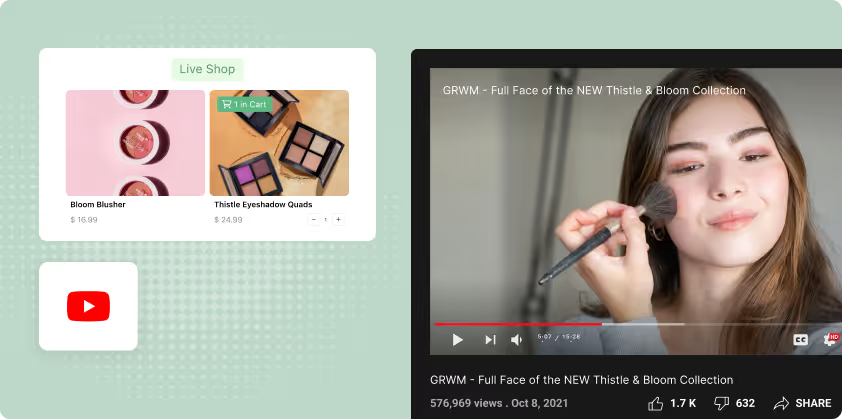
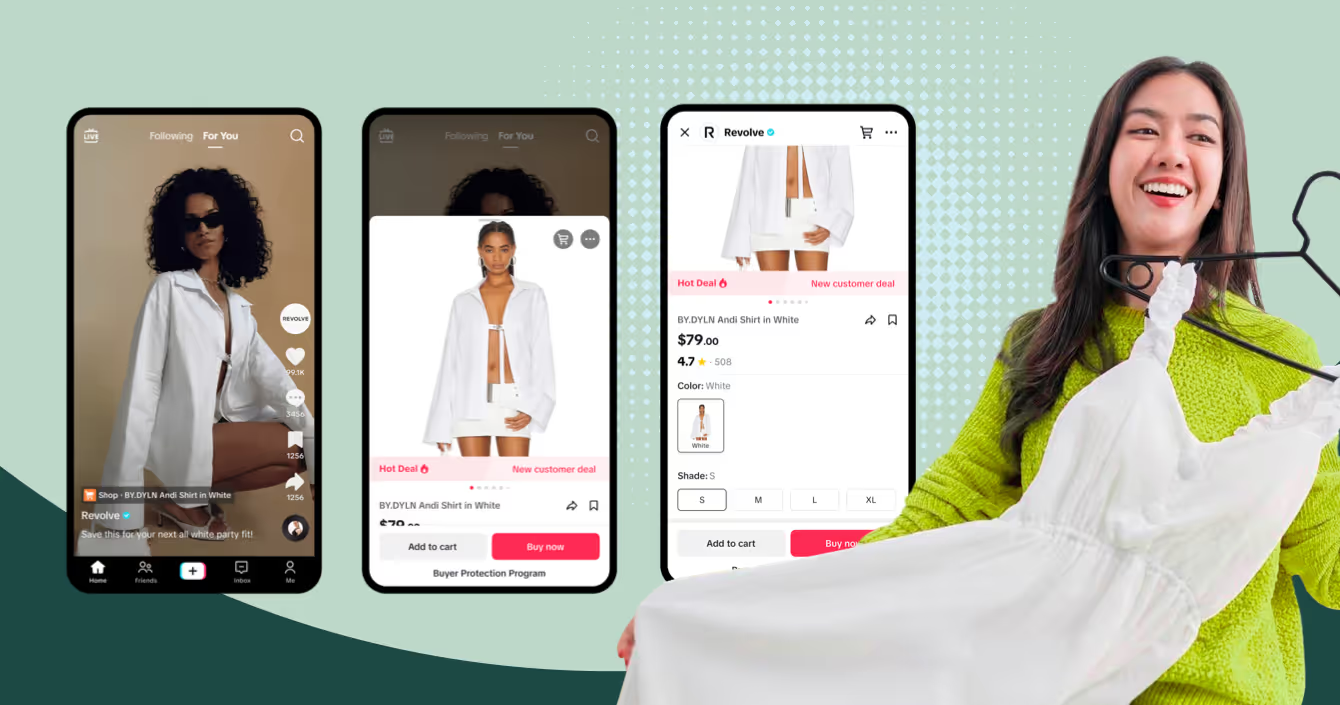
- Affiliates respond best to frictionless, conversion-optimized formats such as native storefronts, direct shoppable links, and short-form video with embedded calls to action that remove every barrier from the buying process. Live shopping events are best reserved for your affiliate segment, where the creator is motivated to drive sales for your brand. These broadcasts create immediate urgency and allow for real-time product education, community interaction, and direct sales.
- Ambassadors, by contrast, are better suited to longer-form storytelling and campaign-led content that reinforces brand values over time.
- UGC creators should be briefed specifically for the placement the content will serve, as product pages need different assets than paid social ads, for example.
Plus, ensure you match the right creator personality to the specific product category to keep the audience tuned in. A highly technical product requires a detail-oriented creator, whereas lifestyle goods benefit from energetic, fast-paced hosts.
Scaling Your Program by Repurposing UGC as Paid Ads
The fastest way to scale your results is by repurposing top-performing UGC as paid social ads. Because UGC creators produce content you own outright, you can test assets organically and then amplify proven winners without additional licensing friction. This approach lowers customer acquisition costs and boosts overall conversion rates.
But remember, audience fatigue happens much faster with paid distribution, requiring a steady pipeline of new UGC assets. Protect your ad spend by formatting your proven content carefully:
- Add clear, compelling calls to action directly on the video.
- Optimize all dimensions and safe zones for mobile viewing.
- Preserve the native, authentic feel while ensuring basic brand compliance.
The Technology Needed to Manage Creator Segments at Scale
Tracking performance across affiliate, ambassador, and UGC segments simultaneously requires robust technology. Attempting to manually monitor each program type exposes you to tracking errors, delayed payouts, and missed optimization opportunities.
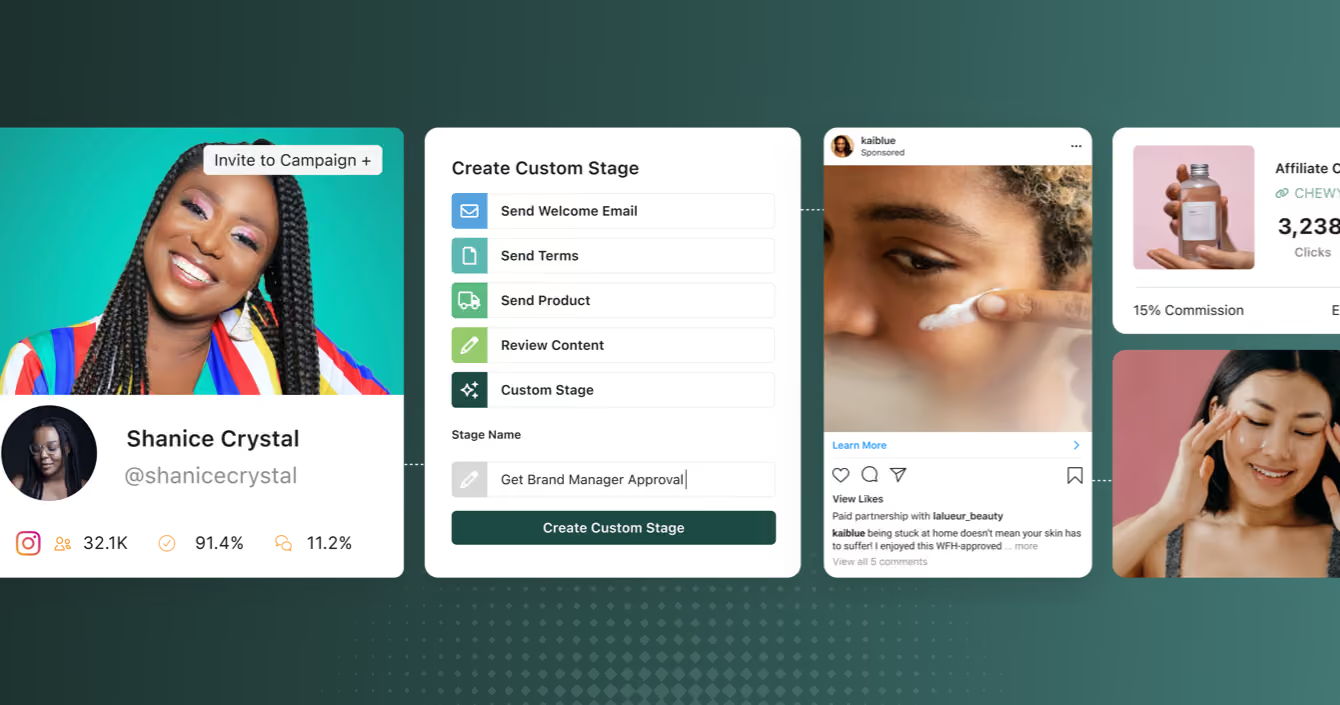
You need dedicated affiliate marketing software to manage automated payouts for your affiliate segment, track unique shoppable links, and measure individual creator ROI accurately. For ambassadors, you need relationship management and campaign tooling. For UGC, you need asset libraries and usage-rights tracking. Platforms like Aspire provide this essential infrastructure by connecting all 3 creator segments within a single performance-tracking environment.
Segment Creators by Their Strengths
High-performing social commerce programs rely on a clear segmentation of your creator roster: affiliates to convert, ambassadors to build loyalty, and UGC creators to supply scalable content. Aligning each segment to the right funnel stage and content format lets you address the entire customer journey while mitigating the risks of broad, untargeted advertising spend.
Take time this week to audit your current creator roster. Assign each creator to the affiliate, ambassador, or UGC segment that best matches their relationship with your brand, and build briefs and compensation structures around those roles.
Book a demo to learn how to scale each segment of your creator program with Aspire.