How Brands and Creators are Navigating Content Usage Rights in 2026

New data reveals how brands and creators price and negotiate content usage rights in 2026, and why creator content is becoming paid media creative.
As paid social and influencer marketing continue to converge, content usage rights have become a key conversation topic among marketers and creators. What was once a contractual detail is now a key business decision for both parties. Brands are increasingly relying on creator content for paid ads, while creators are becoming more aware of the value their content delivers beyond organic posts.
To better understand how both sides are adapting, we surveyed nearly 900 marketers and creators on how they handle and price content usage rights. Their responses point to a market that is becoming more structured, more performance-driven, and more closely aligned with paid media strategy.
Here are the key takeaways.
How brands are thinking about usage rights
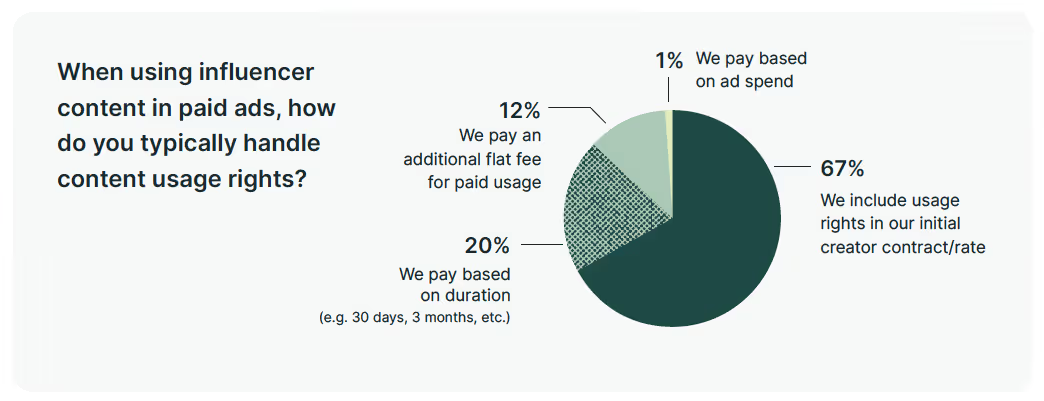
77% of brands actively repurpose creator content in their paid ads. As a result, most marketers are baking usage rights directly into their deals, with 67% including paid usage in the creator’s initial contract or rate. Others take a more flexible approach by paying based on duration or adding a flat fee later when content performs well.
When brands do pay extra for usage:
- 43% pay under $500
- 14% pay between $500 and $1,000
- 11% pay between $1,000 and $2,500
- A smaller group pays more for long-term or high-performing assets

In 2026, marketers are treating creator assets as paid media creative rather than one-time social posts. Usage is increasingly budgeted based on campaign scope, performance goals, and how long the content will run.
In practice, this means brands are:
- Planning usage earlier in the campaign process
- Paying for longer durations when ads perform well
- Prioritizing creators whose content drives measurable outcomes
How creators are pricing usage rights
From the creator perspective, pricing is more varied but increasingly structured.
When asked what they typically charge for paid usage, 37% of creators reported charging $500 or less, while 33% charge between $500 and $2,500. A smaller portion charges higher amounts.
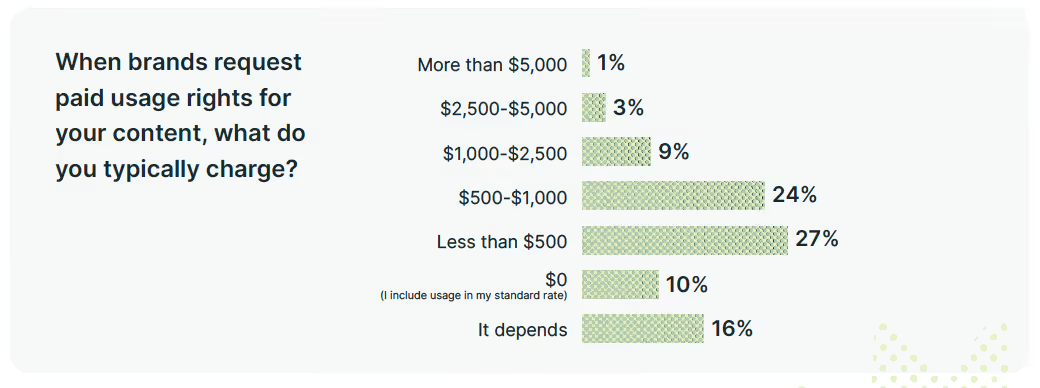
Meanwhile, 16% of creators said their pricing depends on a variety of factors, such as:
- The duration of the ad
- The platform scope, such as social only vs. multi-platform
- Whether content runs as a Partnership Ad or only under the brand’s handle
- Whether exclusivity is required
Many creators are also adopting percentage-based models, commonly charging 15% to 35% of their base rate per 30 days of usage. Others offer flat extension fees between $500 and $1,000. These approaches mirror traditional advertising licensing, where pricing reflects time, distribution, and commercial intent.
Where brands and creators are aligning
While brands and creators approach usage rights from different sides of the deal, their strategies are converging. Both are moving toward duration-based pricing models, clearer expectations upfront, and performance-informed decisions about whether to extend usage.
Now, creator content is no longer confined to organic posts and short-term campaigns. It is increasingly used as paid media creative, extending its value across platforms and throughout the funnel. As a result, usage rights are becoming a standard part of campaign design rather than a recurring point of confusion or negotiation.
What will usage rights look like going forward?
In 2026 and beyond, creator content will play a central role in paid media performance and budget allocation.
This shift is being accelerated by Meta’s Andromeda system, which rewards ad accounts that feed its AI a steady stream of fresh creative. Brands now need volume, variety, and velocity of content to stay competitive in Meta’s auction environment. That makes creator partnerships more valuable when usage rights allow brands to test, rotate, and scale assets across campaigns and platforms.
At the same time, economic pressure and platform changes are pushing marketers toward performance-based models, including affiliate partnerships, mid-tier and micro creators, and formats designed to convert rather than simply reach. To support these strategies, brands are negotiating for longer usage windows, multi-platform rights, and access to raw files so each piece of content can do more work.
Several norms are beginning to take shape:
- 30-day usage windows as a baseline
- Monthly pricing tied to duration
- Percentage-based models tied to base creator rates
- Higher fees for long-term, multi-platform, or exclusive rights
Together, these trends point to a more mature, performance-driven influencer ecosystem, where creator content functions as scalable media and usage rights are built into campaign strategy from the start.
For more insights on how influencer marketing is evolving this year, download our new report, The State of Influencer Marketing 2026.