How to Turn Creators Into a Sales Channel This Black Friday

Learn how to turn creators into a measurable BFCM sales channel with the right offers, affiliate pay, and tracking.
US social commerce is projected to top $100 billion in 2026, up from roughly $87 billion the year before, and creators are the engine behind that growth. Shoppers now discover, research, and buy without ever leaving their feeds, which means the line between a creator's content and your checkout page has all but disappeared. In a season where maximizing revenue is the top priority, this shift changes the BFCM game.
Fortunately, turning creators into a measurable sales channel is a repeatable formula that combines 4 factors:
- A strong offer
- Performance-based pay
- Clean tracking
- Well-timed incentives
Here's how to build your creator-led sales engine before Black Friday and Cyber Monday.
Meet shoppers where they're already buying
Creators drive sales because their audiences are already in a buying mindset. 58% of adults have purchased a product because of an influencer endorsement, and among Gen Z, 73% say social media is their main source for discovering new products.
Most social platforms have caught up to that behavior. TikTok Shop alone is on track for $23.4 billion in US sales in 2026, a 48% jump year over year, and creator content sits at the center of it. When a creator can demo a product and link straight to purchase in the same video, the path from inspiration to checkout collapses into a few taps.
For marketers, this means treating creator content as a storefront, not just a billboard. Make sure every partnership has a clear, trackable route to buy, whether that's a shoppable post, an affiliate link, or a native in-app shop.
Start with an offer worth sharing
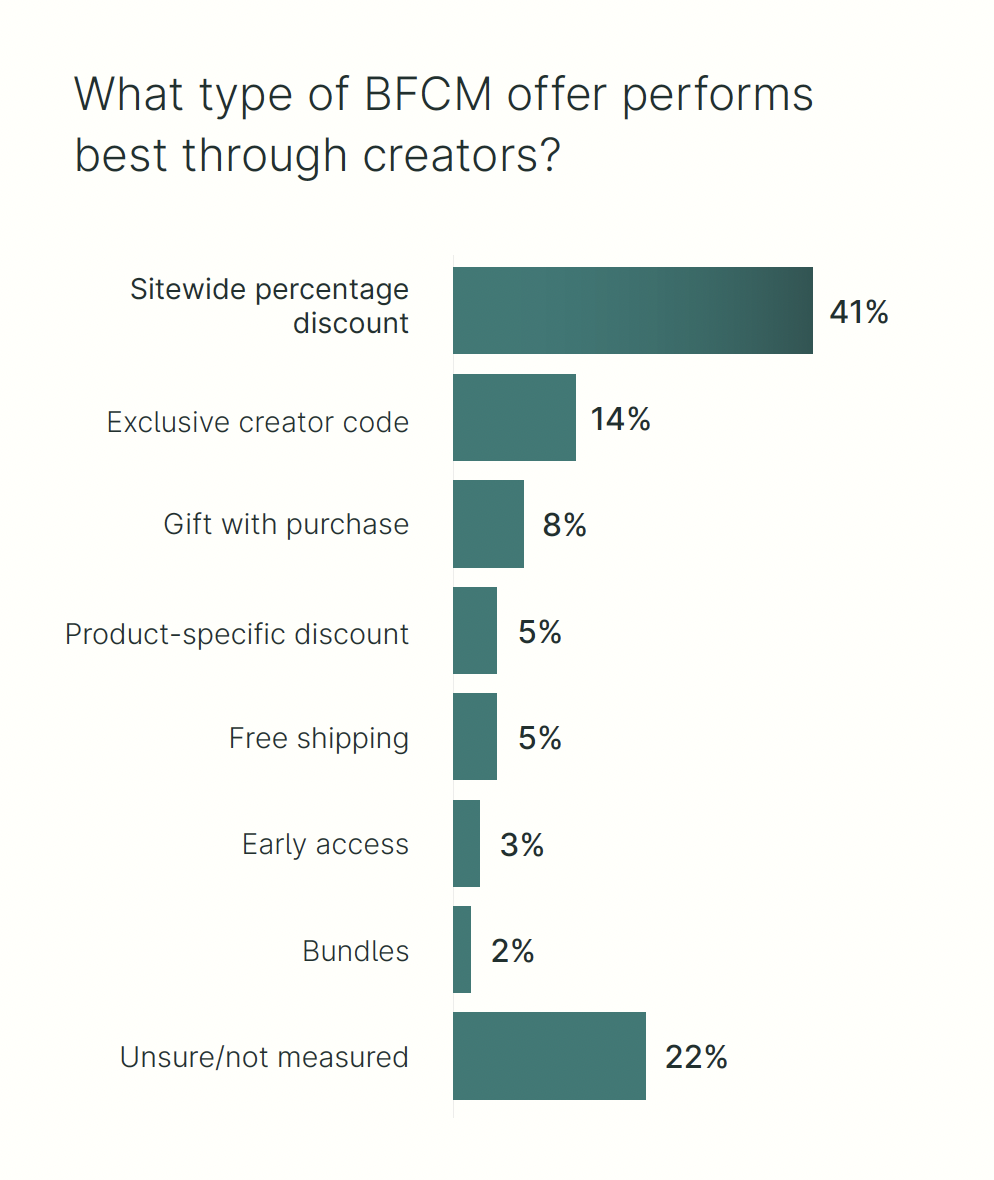
A creator can only sell as hard as the offer lets them. When we asked which promotions perform best through creators, a sitewide percentage discount was the clear winner (41%), followed by exclusive creator codes (14%) and gift-with-purchase deals (8%).
The deepest discount isn’t always the answer, though. Influencer promo code discounts have shrunk to around 15% on average, down from roughly 19% a few years ago, and shoppers are responding to credibility over sheer markdown.
That's why the story around the offer matters as much as the number. Brief your creators to sell product value (quality, convenience, and real-life use) instead of leading with the price cut. And remember, authenticity carries the sale here. 64% of consumers distrust creators who don't clearly disclose brand relationships, so transparent, relevant recommendations will always outperform a hard-sell promo read.
Pay creators for performance, not just posts
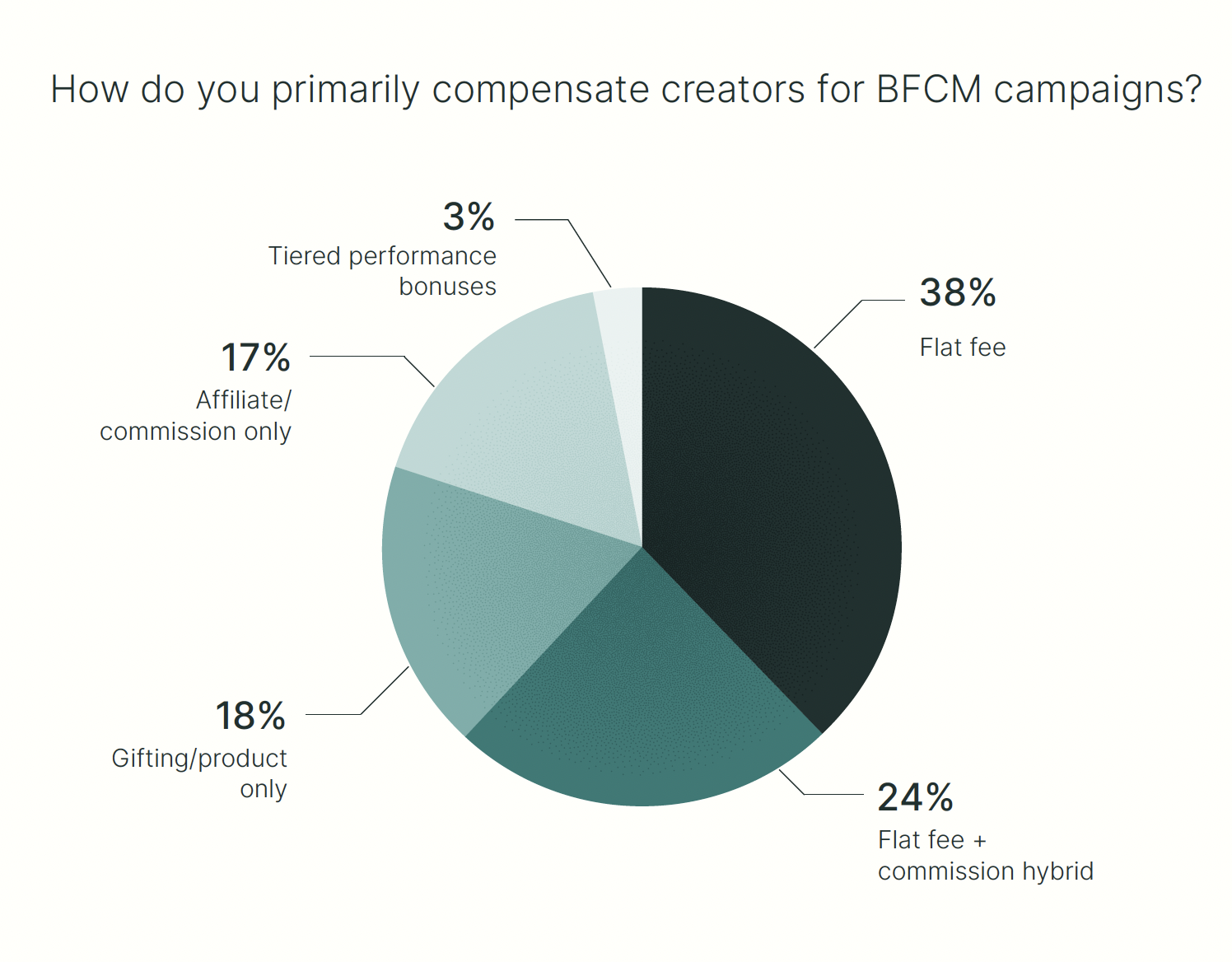
The fastest way to turn creators into a sales channel is to tie their pay to sales. Flat fees remain the most common model (38%), but performance-based pay now factors into 41% of BFCM programs, whether through a flat-fee-plus-commission hybrid (24%) or an affiliate-only deal (17%).
And it pays off. Creator-driven affiliate links convert at roughly 4.5% on average (and 7% or higher for micro-influencers), compared to just 1 to 3% for legacy affiliate networks. Commission also keeps creators posting and selling across the entire season rather than going quiet after a single flat-fee post. It's a model built for a channel that's expected to perform, which is likely why creator-led commerce is one of the fastest-growing corners of the $20.6 billion creator economy.
Make every sale trackable
You can't optimize what you can't measure, yet 22% of marketers admit they aren't tracking which offer type actually performs best through creators.
To close this gap, give every creator a unique, trackable code or link. By doing so, audiences get a reason to buy now, and you get clean, creator-level attribution on every sale. With that data in hand, you can see which partners, offers, and messages are driving revenue while the campaign is still live, then move budget toward the winners in real time instead of waiting for a post-campaign wrap report.
Gamify the final push
Once your offer, pay structure, and tracking are in place, you have everything you need to engineer a final-week surge. The stretch from Black Friday to Cyber Monday is a massive window. Last year, Cyber Monday became the biggest online shopping day in history with $14.25 billion in US sales. Shoppers are still browsing and waiting for a final nudge, so keep your creators active all weekend.
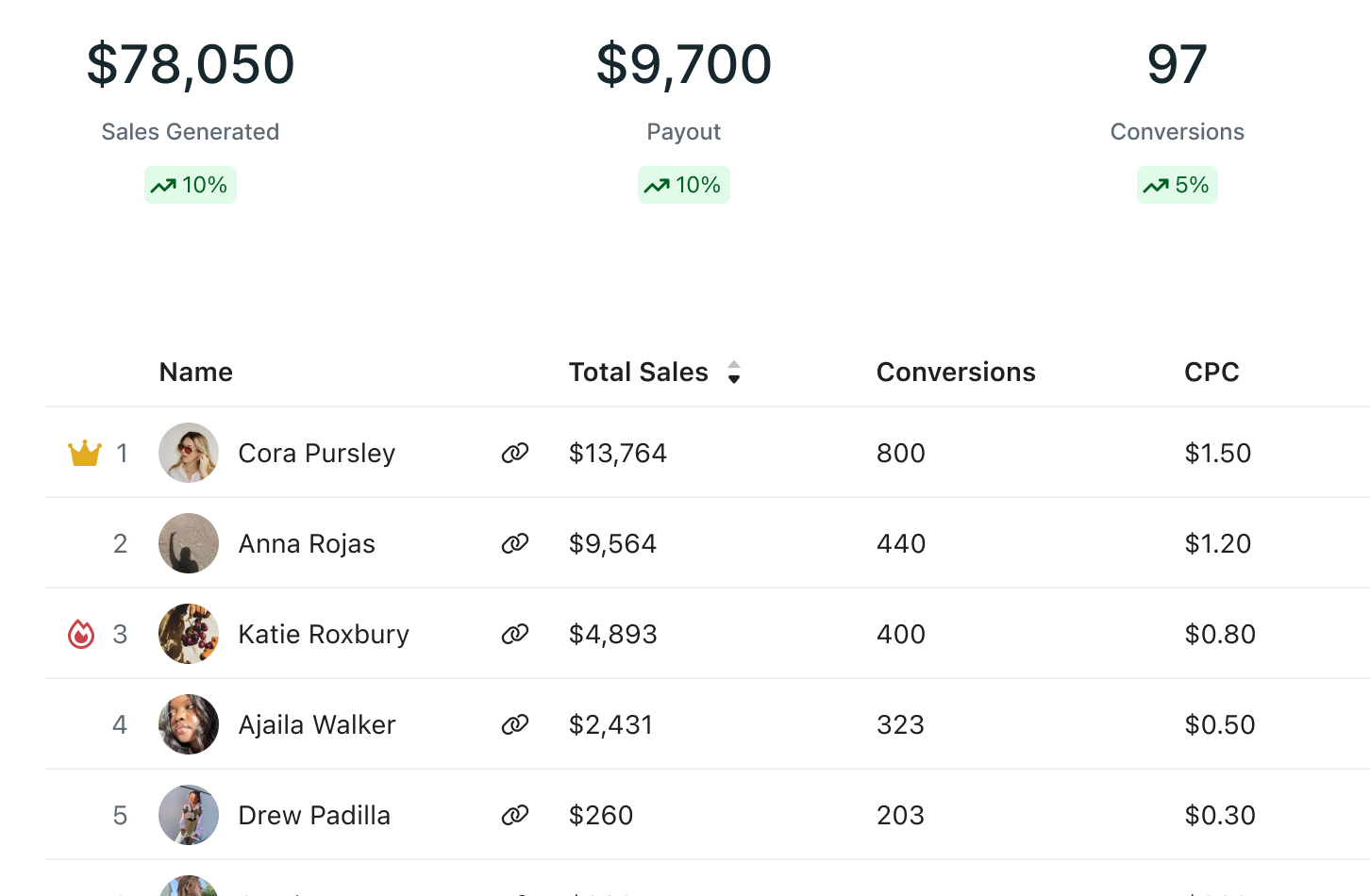
Short-term affiliate incentives are the spark. Offer creators time-sensitive performance bonuses like a commission boost on all sales through Cyber Monday, or tiered cash rewards for hitting set thresholds. Setting up a leaderboard can also turn the home stretch into friendly competition, and a quick "Creator Picks" campaign (creators sharing their favorite in-stock products or bestsellers) keeps momentum going right through the weekend.
Build the engine before Black Friday
Turning creators into a sales channel is not about one viral post. It's a system: meet shoppers where they already buy, give creators an offer worth sharing, pay for performance, track every sale, and time your incentives to peak intent. Build that engine before Black Friday, and every creator partnership shows up in your revenue.
Want the full playbook? Download our 2026 BFCM Influencer Marketing Playbook to learn more about the budgets, timing, content, and tactics driving the most sales this season, all drawn from the marketers running these programs right now.