Why Every Influencer Program Needs an Affiliate Layer

Turn influencer ROI from a black box into a revenue engine. Learn how an affiliate layer and the right affiliate marketing software drive measurable sales.
While brands are increasing their influencer marketing spend, nearly 60% still cite measuring ROI as their top challenge. Influencer marketing excels at building top-of-funnel awareness, but its direct sales impact can feel like a black box. The solution is to evolve the partnership. By layering a performance-based affiliate model onto your program, you can transform your influencer strategy from a branding expense into a measurable, scalable, and highly efficient revenue engine.
The Disconnect: Why Traditional Influencer Programs Fall Short
The original influencer marketing model (paying a flat fee for a set number of posts) was built for awareness, mimicking the reach of traditional advertising. But as every marketing dollar gets scrutinized for its return, this approach has critical limitations.
The ROI Black Box
The primary challenge with traditional influencer campaigns is proving direct sales attribution. Metrics like likes and comments are useful for gauging engagement, but they don’t pay the bills. Without a clear, trackable line from a creator’s post to a customer's purchase, calculating a true return on investment is nearly impossible. This ambiguity makes it difficult to justify budgets and understand which partnerships are truly moving the needle.
Misaligned Incentives
When you pay a creator a flat fee, you're paying for content. Their incentive is to fulfill the contract: post the content, check the boxes, and move on. There is no built-in motivation for them to drive sales. This creates a transactional, short-term relationship that ends once the post is live.
The Hybrid Solution: Fusing Influencers with Affiliate Marketing
Forward-thinking brands are closing this gap by fusing their influencer and affiliate strategies. This hybrid model represents the natural evolution of creator partnerships, solving the core issues of attribution and incentive alignment by combining authenticity with performance. For a foundational overview, explore our Affiliate Marketing Guide: Build Revenue Streams with Creators.
Redefining Performance Marketing with Creators
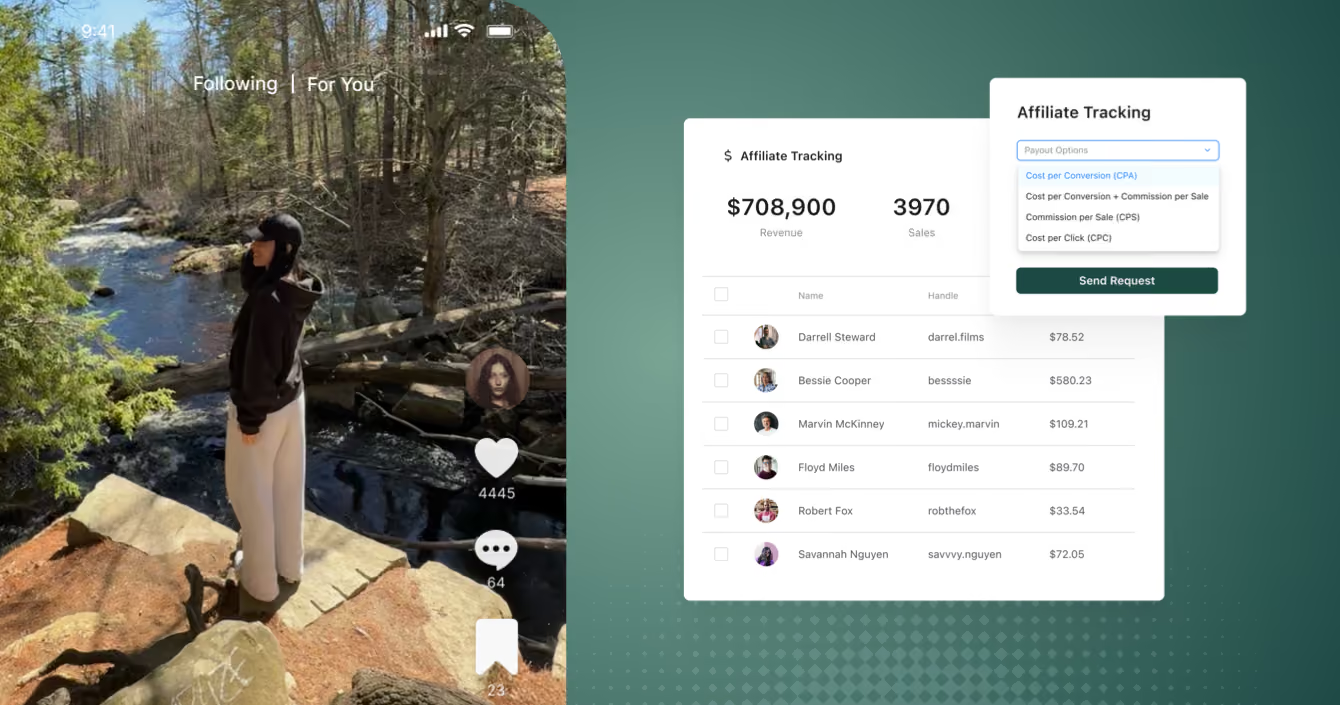
An influencer-affiliate program is a strategy where creators use unique, trackable affiliate links and promo codes in their content. Instead of (or in addition to) a flat fee, they earn a commission on every sale they generate. This simple shift fundamentally changes the dynamic. Your most trusted creators become a performance-based sales force, leveraging their authentic connection to drive conversions. It’s an approach built for marketers who demand results, as detailed in our Performance Marketer’s Guide to Affiliate Marketing.
Key Benefits of an Integrated Approach
Combining these two disciplines delivers powerful, compounding benefits that traditional programs cannot match.
- Pay for performance: This model dramatically de-risks your marketing spend. You directly tie costs to revenue, ensuring you only pay for what works. This leads to a more efficient customer acquisition cost and a clearer return on every dollar spent [5].
- Build authentic, long-term partnerships: When creators have uncapped earning potential through commissions, they are motivated to promote products they genuinely believe in over the long term. Their success is tied to your success, fostering a true partnership focused on mutual growth.
- Achieve full-funnel impact: The hybrid model covers the entire customer journey. Authentic influencer content builds top-of-funnel awareness, while trackable affiliate links provide the perfect mechanism for bottom-of-funnel conversion.
- Create a scalable sales channel: You are building an evergreen engine for growth. By equipping a network of trusted advocates with the tools to sell, you can leverage promo codes and affiliate links to drive sales consistently and predictably.
How to Build and Scale Your Influencer-Affiliate Program
Implementing a hybrid program requires a strategic approach and the right technology. A unified platform is critical for managing discovery, tracking, and payments in one place, as outlined in the Aspire Platform Overview.
Step 1: Pilot affiliate with your top-performing creators first.
If you’ve already run a few influencer marketing campaigns, cherry-pick your top performers and turn them into affiliates. They’re likely already driving sales for your brand. Simply give them promo codes or links to simplify their audience’s path to purchase.
If you don’t already have a network of creators, the best affiliates are often authentic brand fans. Look beyond follower counts to identify creators who are already talking about your products or whose audiences perfectly match your ideal customer profile. Use a platform to discover creators who align with your brand's ethos to build a high-performing program from day one.
Step 2: Use unique tracking links tied to attribution windows.
Reliable attribution is the backbone of any affiliate program. You need a robust system for generating and tracking unique affiliate links and custom promo codes for every partner. Use a tool like Aspire to gain access to must-have affiliate features like:
- SecureCodes: Generate a unique, single-use code for every click, so the code expires after redemption.
- Buy X, Get Y Offers: Easily create and sync any “Buy X, Get Y” offer from Shopify. Creators get a ready-made, trackable offer link that auto-applies the BOGO deal at checkout.
- Offer Landing Pages: Create shareable links that direct shoppers to curated storefronts featuring branded content, featured products, and creator recommendations.
- And more
Step 3: Set commission tiers and reward volume and loyalty.
Design a competitive commission structure. Getting this right is a balancing act. Set rates too low and you won’t attract top talent, but set them too high and you risk eroding margins.
Consider gamifying your program with tiered commissions that reward creators with higher rates when they reach certain sales milestones, incentivizing everyone to sell more. For a deeper look at offer structures, learn how to design affiliate campaigns that drive revenue.
Step 4: Track and optimize.
The right affiliate marketing software will handle measurement and performance reporting, on top of partner onboarding, contract management, communication, commission payouts, and more. This frees up your team to focus on building relationships and optimizing strategy, not managing administrative overhead. Our 5‑Step Playbook to Maximize Aspire Affiliate Marketing Tools shows you how to put this into practice.
Navigating the tradeoffs and risks
While powerful, a hybrid model introduces new complexities that require careful management.
- Brand alignment: A commission-only focus can tempt some creators to prioritize aggressive sales tactics over authentic brand storytelling. Mitigate this by recruiting partners who genuinely love your product and providing crystal-clear brand guidelines.
- Margin protection: Every commission paid directly impacts your profit margins. You must model your costs carefully and implement safeguards against affiliate fraud, such as coupon code abuse, to protect your bottom line.
- Attribution complexity: In a multi-channel customer journey, last-click attribution can be misleading. A sophisticated affiliate marketing software like Aspire provides deeper insights, helping you understand the true influence of each partner beyond a simple final click.
Measuring Success and Optimizing for Growth
The beauty of an influencer-affiliate program is its measurability. You can move past vanity metrics and focus on the data that directly impacts your bottom line. The goal isn't just to track performance, but to use those insights to continually optimize and grow.
Focus on the metrics that matter
With a performance model, your KPIs become directly aligned with business goals. While still valuing the awareness generated, track these bottom-funnel metrics above all else:
- Sales Revenue: The total revenue generated by your affiliates.
- Conversion Rate: The percentage of clicks that result in a sale.
- Return on Spend (ROS): The revenue generated for every dollar spent on commissions and fees.
- Average Order Value (AOV): The average value of purchases made through affiliate links.
- Customer Acquisition Cost (CAC): How much it costs to acquire a new customer through this channel.
With a platform like Aspire, you can track these metrics in real time and see exactly how creator content drives revenue with our features designed to convert.
Turn insights into action
Data is only useful if you act on it. Use performance reports to identify your top-performing creators, content formats, and promotional offers. Double down on what works by offering higher commission tiers to your best affiliates or providing them with exclusive deals for their communities. You can even transform influencer content into high-performing ads, amplifying the most effective organic affiliate posts with paid spend to scale your results exponentially.
The Evolution of the Creator Economy
As the industry evolves, moving away from the opaque, flat-fee model to embrace a performance-based affiliate layer is a strategic imperative.
This hybrid approach, when managed thoughtfully, transforms your influencer marketing program from a brand-building cost center into a predictable, scalable, and profitable revenue channel. It aligns incentives, proves the value of your creator partnerships with hard data, and establishes why a powerful affiliate platform is crucial for eCommerce. By paying for performance, you build stronger, more authentic partnerships and an evergreen sales engine that grows with your brand.
To explore all of Aspire’s influencer-affiliate features, book a demo.