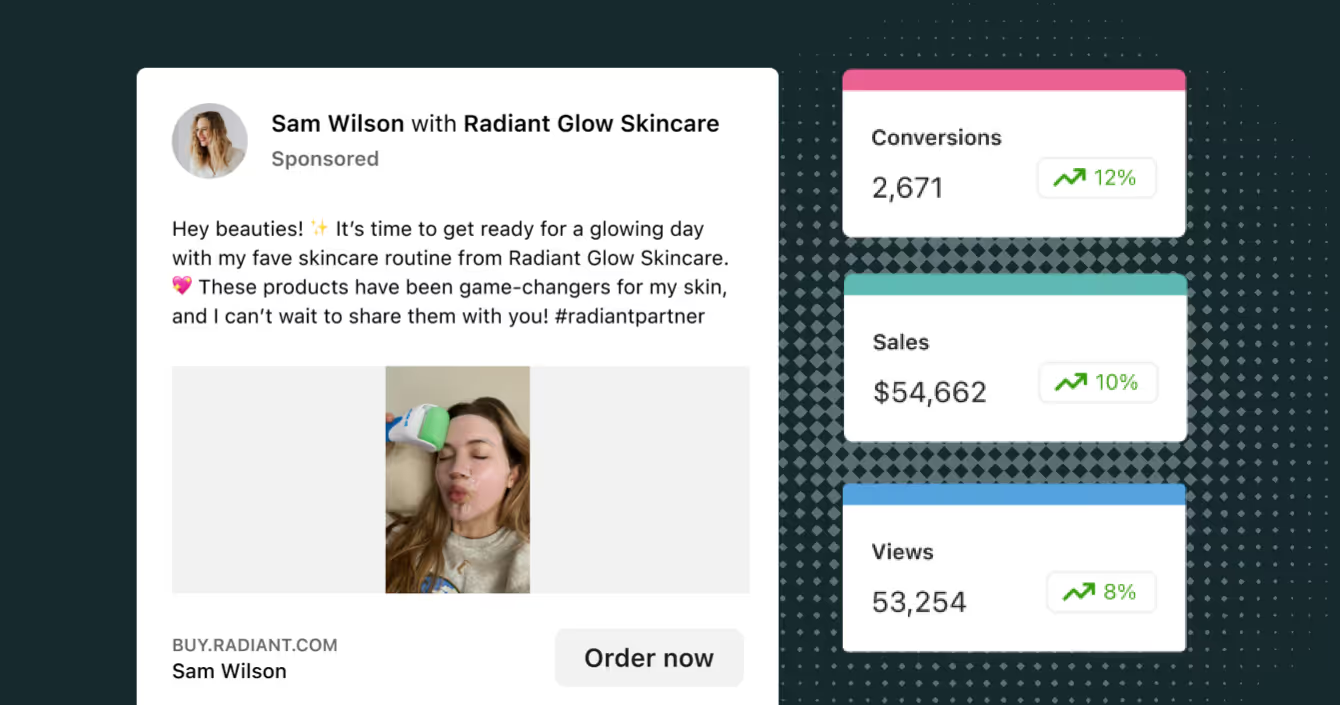
A Practical Blueprint for Scaling Ads with Creator Content

Ready to scale your paid ads? Learn how using creator content for ads can lower costs and boost ROI. Get our practical, step-by-step blueprint.
Every performance marketer knows the cycle: ad costs creep up, engagement plummets, and creative fatigue kills your return on ad spend (ROAS). The ads that delivered last quarter are now invisible.
So, what’s the solution? You need to shift how you source your ad creative. Brands systematically using creator content for paid ads are seeing a 50% reduction in cost-per-click because they are running assets that audiences choose to watch.
This guide provides five practical steps to build, test, and scale a creator-powered ad strategy to build a scalable engine that turns a steady stream of authentic content into your highest-performing paid media asset.
Step 1: Build Your Creator Ecosystem Before You Amplify
You cannot amplify what you do not have. Pouring budget into paid media is useless without a reliable pipeline of high-quality content.
Instead of one-off campaigns, prioritize long-term relationships with creators who become genuine brand ambassadors. These ongoing partnerships generate a deeper understanding of your brand and produce more authentic content over time. Start small by building a cohort of 5-10 micro-creators who genuinely align with your brand’s values.
Building this foundational ecosystem involves:
- Collaborative briefing: Provide clear goals and brand guardrails, but grant creators the freedom to produce content in their own voice. The best content comes from their authentic experience with your product.
- Prioritizing authenticity: Encourage creators to share real stories. This resonates more deeply than any polished corporate script ever could.
- Securing usage rights: This is non-negotiable. Without explicit rights to use creator content in paid advertising, your best assets are legally unusable. Ensure your contracts are clear from the start.
A steady pipeline of on-brand content from creators is the fuel for your entire paid media engine.
Step 2: Turn Creator Content into Performance-Driven Ad Assets
With a library of authentic content, the next step is transforming it into a portfolio of ad assets engineered for performance.
But simply boosting an unedited organic post risks poor performance due to the wrong aspect ratio, a weak hook, or no clear call to action. Even creators themselves question whether a single video format can work across all platforms without adaptation.
The goal is to edit and repurpose posts to feel native to each paid channel while retaining the creator's authentic voice. Effective creator ads feel less like interruptions and more like the content people came to see. This content is also 31% more memorable than traditional ads.
Start by identifying your best-performing organic creator posts. A single long-form video can be your new workhorse, re-edited into multiple assets:
- A 15-second hook for Instagram Reels
- A 30-second problem-solution story for TikTok
- Static image pull-quotes for Facebook ads
This approach maximizes the value of every single asset. Then, systematically A/B test this creator content against your existing branded creative to prove what resonates. For brands ready to build a complete workflow, a full five-step strategy can help integrate this process from start to finish.
Step 3: Implement a Structured Testing Framework
Creative has become the primary targeting lever on platforms like Meta. The algorithm finds your audience, but only if you feed it high-quality, varied creative. But scaling with creator content requires a disciplined testing process, not random guessing. If you skip this step, you may burn your budget by running low-performance ads.
Adopt a hypothesis-first approach. Each test must be designed to answer a specific question: "Does a direct-to-camera hook outperform a product unboxing?" or "Does this testimonial drive a lower CPA?" Isolate one variable at a time by testing different hooks, calls to action, or captions while keeping the core video and audience the same. This is how you build a system that can go from producing 5 ads a month to 500.
Allocate 15-25% of your paid social spend specifically for testing new creative. This is the investment in building a pipeline of validated ads ready to scale. When a piece of creator creative proves successful in a testing campaign, graduate it into your always-on, scaled campaigns. For a deeper look at this methodology, explore a dedicated framework for testing creator ads.
Step 4: Use UGC as a Full-Funnel Conversion Driver
Using creator content only for top-of-funnel ads is a massive missed opportunity. Your most powerful social proof should be leveraged where it has the most impact (AKA close to the point of purchase). After all, 62% of shoppers are more likely to buy a product if they can see customer photos and videos first.
Integrating this content across the customer journey builds trust and accelerates conversions, a strategy that marketing leaders advocate for building credibility.
- Product pages: Add a gallery of customer photos and videos to provide real-world social proof. Displaying this user-generated content (UGC) can increase conversions by up to 29%. With the right content management tools, you can easily curate and display it.
- Email campaigns: Segment your audience and send them creator content featuring products they’ve already shown interest in.
- Retargeting ads: Show warm audiences authentic testimonials from other happy customers to overcome final purchase hesitations.
- Landing pages: Greet new visitors with relatable creator content to build immediate credibility and reduce bounce rates.
Step 5: Measure What Matters: KPIs for Scaling Creator Ads
To scale effectively, you have to track the right metrics. Relying solely on one metric is like flying blind. You see the outcome but cannot diagnose the problem. A more nuanced set of KPIs is required to understand what’s working, what is not, and why.
Core Performance Metrics
These bottom-funnel metrics directly measure the financial impact of your creator ads.
- Cost per acquisition (CPA): How much does it cost to acquire a customer with a specific creator's ad? This is your core efficiency metric.
- Click-through rate (CTR): Does the creative stop the scroll? A high CTR on creator content shows it is breaking through the noise.
- Conversion rate: Of those who click, how many purchase? This shows whether you are driving qualified, high-intent traffic.
- Return on ad spend (ROAS): For every dollar spent, how much revenue is generated? This is the ultimate measure of profitability.
Leading Content and Creator Indicators
These metrics provide early signals about performance, allowing you to optimize before waiting for lagging conversion data.
- Engagement rate by creator: Which partners generate the most authentic engagement? This helps identify your most valuable creators.
- Performance by content format: Are short-form videos outperforming static images? Are testimonials more effective than unboxings?
- Creator retention rate: Are your best creators continuing to work with you? High retention reduces acquisition costs and leads to better content.
How to Systematize and Scale Your Workflow
Moving from a handful of creator ads to hundreds is an operational challenge. Manual processes (spreadsheets, emails, and shared folders) make growth impossible.
A dedicated influencer marketing platform like Aspire automates the entire workflow. The most powerful tools offer direct API integrations with Meta and TikTok, allowing you to launch Partnership Ads and Spark Ads directly from the platform.
The right technology allows you to manage usage rights, analyze performance, and directly convert creator content into high-impact paid ads. A solution like the Aspire Creator Ads Suite shifts you from a reactive approach to a proactive, scalable ad creation engine. For marketers looking to optimize their process, specific creator management hacks can further accelerate the entire workflow, helping you scale your paid media efforts more efficiently.
Shift to a Creator-Powered Ad Strategy
A creator-led paid media strategy lowers costs, higher engagement, and more authentic customer connections.
To get started, follow this checklist:
- Audit your creative mix: Analyze your current ad spend. What percentage is generic branded creative versus authentic creator content?
- Identify your first cohort: Find 3-5 creators who genuinely love your product and start building real partnerships.
- Establish your measurement framework: Ensure your analytics are configured to track both performance metrics and leading indicators for creator ads.
- Launch your first test: Dedicate a small, controlled budget to test your initial creator ads, identify an early winner, and scale from there.
By following this blueprint, you can exit the creative treadmill and build an efficient, authentic advertising program that drives sustainable growth.