Meta Performance Marketing Summit 2026: 4 Shifts Reshaping Paid Social

Inside Meta's 2026 Performance Marketing Summit: the four shifts reshaping paid social, from Andromeda's creative scoring to attribution and on-platform commerce.
At Meta’s 2026 Performance Marketing Summit, the company confirmed that 70-80% of paid social performance now traces back to the creative itself, with targeting and budget only accounting for the remaining 20-30%. This theme framed the entire conference, and for marketers, it should frame the next year of your paid social strategy.
Here are the 4 shifts from the Performance Marketing Summit worth planning around.
1. Creative quality is the new performance lever.
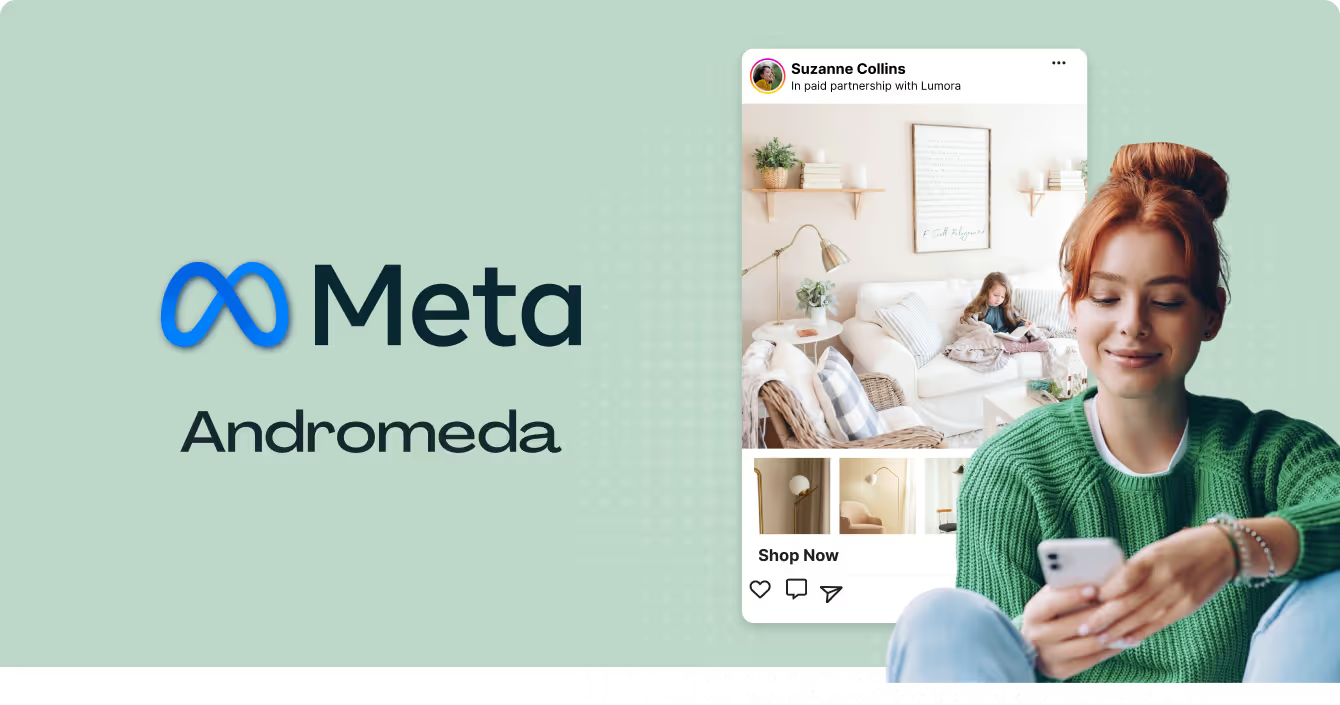
Targeting has been largely solved by Andromeda (Meta's next-gen retrieval and ranking system), which means the bottleneck has moved upstream into the asset itself. In 2026 and beyond, advertisers need to focus on putting the most psychologically distinct creative into the system, rather than refining audience segments.
Andromeda actively penalizes variants that look psychologically redundant, which means two ads hitting the same emotional beat are increasingly treated as the same ad in the auction even when the visuals or voiceover look different on the surface.
The solution is less about volume and more about variance, with different hooks, formats, creator perspectives, and value propositions all running concurrently to give the system enough distinct signal to optimize against.
Meta is also rolling out AI creative tools by default for many SMB advertisers. The catch is that the same AI-generated faces are available to every other advertiser on the platform, and audiences are already learning to scroll past them, which makes AI a useful production multiplier when you start from real creator content (but not a substitute for it).
2. Creators are validators, not amplifiers.
Creator content is successful on paid social not because of reach, but trust. In fact, 81% of people who follow creators do so for the creator's expertise, not for fame. That means creators don’t merely function as billboards for brands, but rather as a trusted reference for consumers.
Meta also dismantled the bigger-is-better influencer mindset with a clean mandate that audience fit beats audience size, and they introduced a 3-tier sourcing framework:
- Direct fit is the obvious lane, where, for example, a motor oil brand hires a mechanic, the audience is already there for cars, and the content lands cleanly. Every agency on earth defaults to it, which makes direct fit the baseline now rather than the actual strategy.
- Adjacent fit is where the auction opens up, since hiring an off-road camper van enthusiast to sell that same motor oil reaches an audience that came for travel but still needs to keep the vehicle running. Meta was explicit that this adjacent territory is where real performance lives, largely because the auction is not crowded with competitors making the same connection.
- Creative fit is the third lane, where you hire a creator for their craft rather than their audience, whether that is a stop-motion animator, a macro lens videographer, or a deadpan comedian. You are licensing a visual or tonal style, and it is the fastest way to inject genuine variance into a system that punishes creative similarity.
In addition to sourcing, advertisers need to speak the language of Reels, where ads built with strong hooks, visual dynamism, clever audio, and text overlays are seeing a 13% increase in return on ad spend.
However, none of this works without a brief that lets creators do their job: creating engaging content. Briefs should provide guardrails, not strict guidelines.
3. Measurement is moving past last-click.
As the customer journey becomes increasingly complex, advertisers need to shift away from last-click attribution and more toward LTV and incrementality. For example, a shopper might first discover a brand through a creator's Reel, save the post, search the brand on Google a week later, and finally convert through a retargeting ad. Under the last-click model, the retargeting ad takes 100% of the credit, even though the creator did the actual work of moving that shopper from never-heard-of-the-brand to ready-to-buy.
To put real numbers behind that gap, Meta shared that Partnership Ads (the format that boosts a post directly from the creator's handle) drove a 22% increase in conversion rate and a 71% brand lift in integrated campaigns.
To put that lift to the test inside any individual brand, Meta is pointing customers to the Meta Impact Test framework.
- A clean control-versus-treatment design that runs for 2-4 weeks
- 30% of the treatment cell allocated to Partnership Ads
- A minimum of 5 distinct Partnership Ads in the cell, which is the smallest amount of variance the system needs to evaluate the format honestly.
If you’ve been measuring creator-led paid with a last-click model, this framework is the upgrade, capturing the lift creators actually deliver across the full funnel rather than only crediting whichever ad happened to be the final touch before purchase.
4. On-platform commerce is the next surface.
Meta is closing the loop inside the app with 2 new updates:
- Instagram's Add-Products feature lets brands tag inventory directly inside organic and creator content, so the purchase path can stay entirely inside the feed.
- The expanded Partnership Ads Hub makes it easier to manage the full creator paid social workflow in one place, from approvals to optimization.
For media teams, that means a new surface to plan against, and for creative teams it means a new format to brief against. Shoppable creator content, native product tagging, and Partnership Ads with embedded product links are going to be standard in the last half of 2026. To stay ahead, treat commerce-ready creator content as a core deliverable rather than a bonus.
What does all of this mean for marketers?
The performance lever on Meta has moved from targeting and budget to the creative itself. That has direct implications for how marketing teams source and brief creators, measure programs, and design for on-platform commerce. Going forward, creator content needs to function as key performance infrastructure.
Want to see how Aspire helps marketing teams turn creator partnerships into measurable paid social performance? Book a demo with our team to see the platform in action.