Direct, Adjacent, Creative: How to Source Creators in 2026

Audience fit beats audience size. Here's how to source creators across direct, adjacent, and creative fit to give Andromeda the variance it rewards.
For years, follower count was the default currency of influencer marketing. Brands used it as the primary filter for discovery and the yardstick for measuring a creator's "worth." But in today's algorithm-driven social landscape, that metric is becoming increasingly unreliable as a standalone measure of value.
And Meta just confirmed it, too. At the 2026 Meta Performance Marketing Summit, the company officially retired the bigger-is-better mindset, reiterating that audience fit beats audience size, especially when it comes to ad performance across Instagram and Facebook.
Why? Meta's Andromeda algorithm now rewards creative diversity over creative volume. In fact, Meta’s study shows that brands running psychologically distinct creative are seeing a 32% better cost per acquisition and a 9% bump in incremental reach. Variety is the secret to success, and that’s not something a single creator type can deliver on its own.
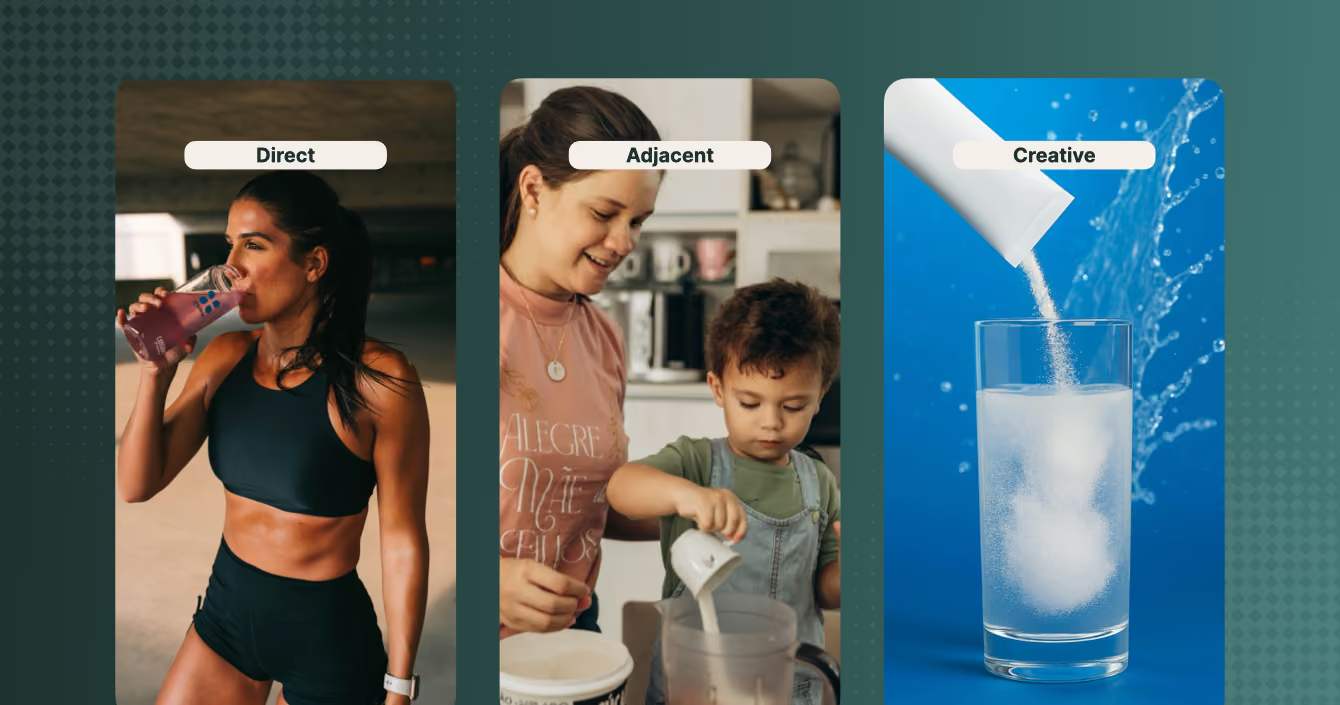
According to Meta, the strongest creator programs today are built across 3 distinct sourcing lanes:
- Direct fit
- Adjacent fit
- Creative fit
Let’s break down what each category means, how to find creators in each one, and how to source across all 3 to feed Andromeda the variance it now rewards.
Direct Fit: The Default Lane
Direct fit is the most intuitive sourcing strategy. A skincare brand hires estheticians. A running shoe brand hires marathoners. A pet food brand hires veterinarians. The creator's audience is already buying or considering the product category, so the message lands cleanly, the engagement metrics look healthy, and the campaign reports favorably internally.
The catch is that direct fit is so intuitive that every brand in the category is competing for the same creators and putting nearly identical content into the auction. That similarity is exactly what Andromeda penalizes. Two skincare brands running esthetician-led product demos get treated as nearly the same ad in the auction, even if the products and creators are different.
Still, direct fit plays a crucial role for brands. It’s the most reliable foundation for credibility-building, particularly for new product launches where audience recognition matters more than variance. But treating direct fit as the only sourcing strategy is what's keeping a lot of programs from scaling.
When to lean on direct fit:
- New category entry where direct-fit creators help your brand earn audience credibility before adjacent or creative voices can vouch for it.
- Highly considered purchases (mattresses, supplements, financial products) where expertise signals are what close the sale.
- Product education where technical or domain knowledge carries the message.
Adjacent Fit: The High-Performance Lane
According to Meta, adjacent fit is where the real performance lives. Hire creators whose audience overlaps with your category tangentially, not directly. For example, a motor oil brand hires an off-road camper van enthusiast. A coffee brand hires a 5am workout creator. A mattress brand hires a creator who covers couples therapy and treats sleep hygiene as a relationship issue.
The audience came for one thing (travel, fitness, relationships) but has a real need that your product solves (vehicle maintenance, morning energy, better sleep). The creator's storytelling pulls those threads together in a way that feels native to their voice.
When every brand in your category is bidding on the same direct-fit creators, the CPMs climb and the creative looks the same across the board. The adjacent territory is less crowded, which means lower auction pressure, more distinct creative entering the system, and stronger Andromeda quality rankings.
Where to find adjacent fit creators:
- Lifestyle adjacency: A sleep supplement brand can partner with travel creators whose audience deals with jet lag and unfamiliar hotel beds, while a cleaning product brand can work with home renovation creators whose viewers are forever cleaning up after projects. The audience came for the lifestyle, and your product solves a real friction point inside it.
- Demographic adjacency: A skincare brand can partner with parenting creators, since parents are also adults navigating their own skincare alongside everyone else's bedtime routines. The audience came for relatable parenting content and is buying in your category anyway.
- Activity adjacency: An athletic apparel brand can work with chefs (because chefs are on their feet through ten-hour shifts), while an ergonomic seating brand can partner with gaming creators (because gamers sit at a screen for long stretches). The product solves a friction point inside an unrelated daily activity.
Creative Fit: The Variance Lane
Creative fit creators are hired for their craft or aesthetic rather than their audience. The audience overlap is incidental. What you are buying is a visual or tonal signature.
For example:
- A skincare brand hires a stop-motion animator to show the product transforming on screen, even though the animator's audience is animation fans rather than the brand's core demographic.
- A coffee brand hires a deadpan comedy creator to make ads that read as bits, not commercials.
- A beauty brand hires a macro lens videographer to shoot extreme close-ups of product texture in a style nobody else in the category is producing.
- A sneaker brand hires a slow-motion specialist to give the shoe a cinematic launch moment.
Creative fit is the fastest way to inject variance into a paid social system that penalizes creative similarity. But it’s also one of the harder lanes to source for, because it requires brands to evaluate creators on craft signals (editing rhythm, framing choices, color, audio sensibility) rather than the easier-to-skim metrics of follower count and engagement rate.
The good news is that Andromeda is doing the heavy lifting on whether the creative actually works. If a creative-fit ad lands aesthetically and the system reads enough distinct signal in audio, narrative arc, and visual rhythm, the algorithmic rewards follow. The brand's job is to get the right craft into the auction in the first place.
How to Source Across All 3 Lanes
Going forward, brands need to run all 3 creator categories in the same campaign cell and put a portfolio of psychologically distinct creative into the auction from different creator perspectives. Andromeda reads that as the diversity it has been asking for.
Direct fit anchors credibility, adjacent fit opens up uncontested auction space, and creative fit injects the visual and tonal variance the system actively rewards. Each tier does work the others cannot, and combining all 3 is how a program aligns with the way Meta is now telling advertisers to operate.
Follow these best practices when sourcing:
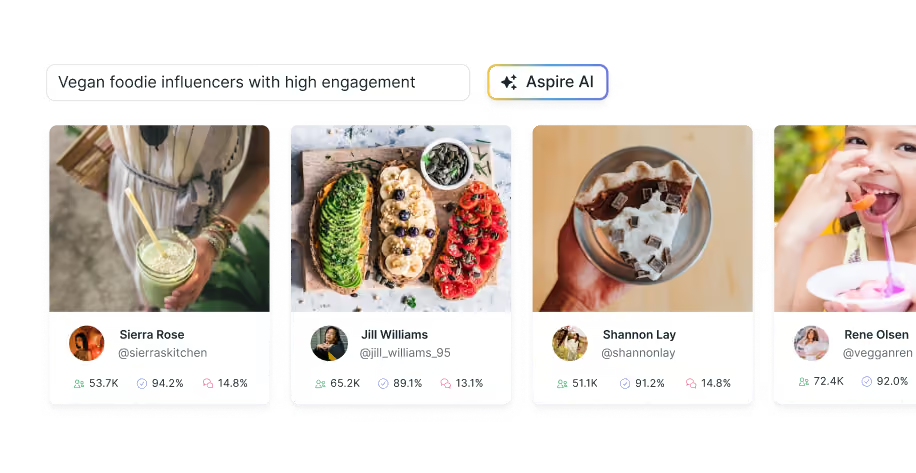
- Build the discovery muscle for plain-language search. Most brands can describe the creator they want in a sentence ("vegan chefs whose audience is mostly in their 30s," "stop-motion creators with a retro aesthetic"), but cannot easily search a creator database that way. Tools that support natural-language creator search collapse the time it takes to find adjacent and creative-fit candidates dramatically.
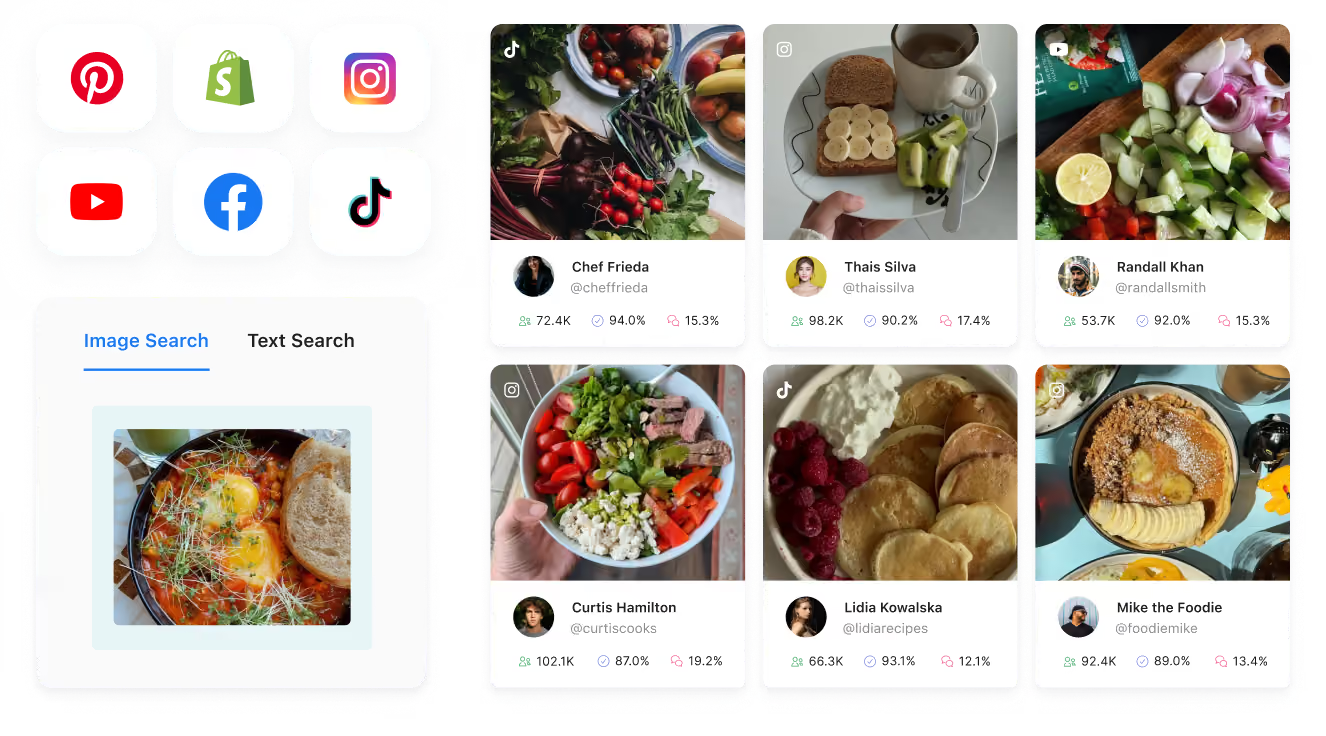
- Use visual search for creative-fit casting. When you’re sourcing for aesthetic, screenshots of reference content are faster than tags. Drag-and-drop visual search lets you surface creators producing similar work in minutes instead of weeks.
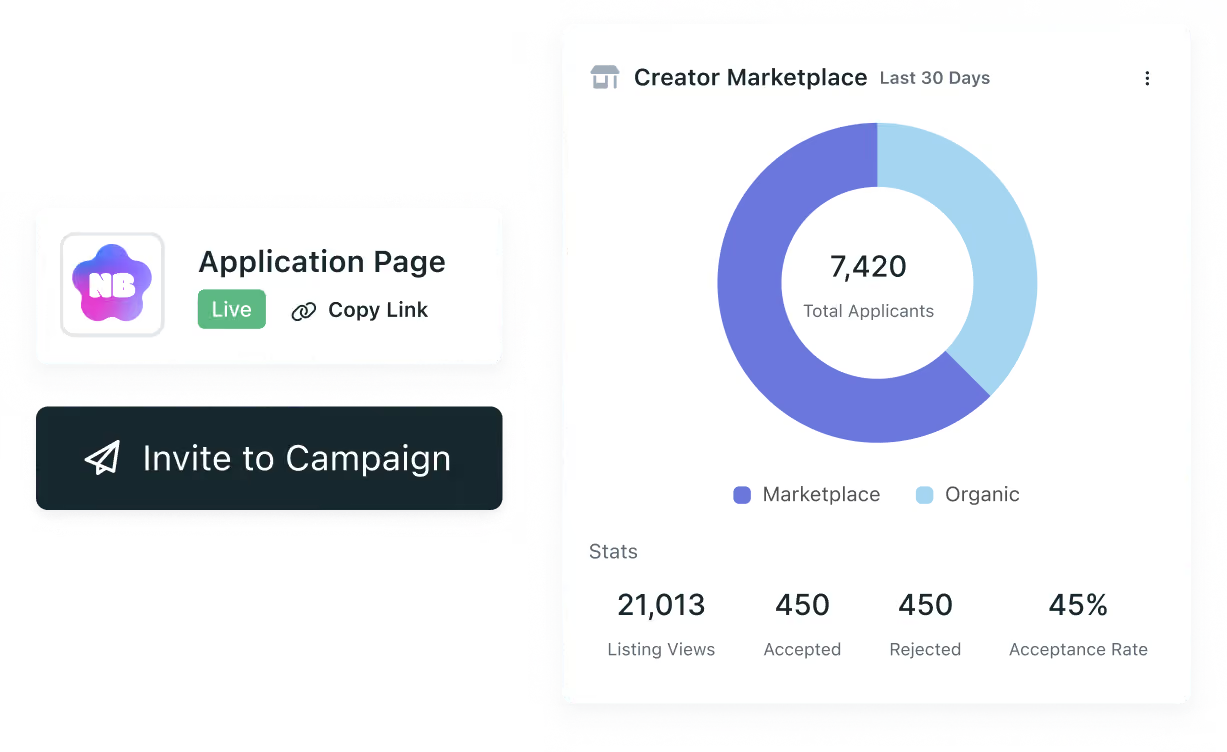
- Open up the brief to the audience. Publishing campaign briefs in Aspire’s Creator Marketplace and letting the right creators raise their hand is a fast way to surface adjacent-fit talent you would not have thought to search for. Specific calls land best ("incoming college freshmen who want to revamp their dorm rooms" beats "Gen Z creators").
- Brief for the fit, not the format. Direct-fit briefs can lean on category expertise. Adjacent-fit briefs need room for the creator to bridge their world to yours. Creative-fit briefs should be light on the script and heavy on the creative latitude.
Aspire's suite of discovery tools was built for exactly this. AI search, Creator Marketplace, image search, and creator recommendations give brands the range to fill all 3 creator categories from inside the same workflow, which is how you can achieve true creative diversity.
Ready to source creators across direct, adjacent, and creative fit from inside the same workflow? Book a demo to see Aspire's discovery infrastructure in action.