How to Use Influencer Marketing in Paid Advertising Campaign

Tired of high ad costs and creative fatigue? Learn to use influencer marketing in paid advertising to build trust, boost ROI, and create ads that convert.
If you are running paid advertising in 2026, you know the landscape is tougher than ever. CPMs are rising, audiences have developed banner blindness, and the polished studio creative that once drove results now struggles to capture attention. Consumers are rightfully skeptical of traditional ads, making your job as a marketer more complex and expensive.
To effectively connect with your audience and combat ad fatigue, marketers need to integrate the authenticity of influencer marketing with the precision and scale of paid advertising. This not-so-niche tactic is a fundamental evolution in paid social strategy that leading brands are using to drive efficient growth. When your ads fail to perform, influencer content is the most reliable fix.
This guide provides a technical, step-by-step framework for using influencer-generated content (IGC) to make your paid campaigns more authentic, profitable, and scalable.
Why Combine Influencers and Paid Ads? The Undeniable Benefits
Before diving into the ‘how,’ let’s solidify the ‘why.’ Combining IGC with your paid media budget is a powerhouse strategy that delivers tangible advantages across the marketing funnel.
Build Unshakeable Trust
Content from a creator functions as a peer recommendation, not a corporate broadcast. When you promote that content, it inherits the creator's credibility, breaking down the skepticism consumers have toward brand-led advertising. This social proof builds brand affinity and is your key to earning trust at scale.
Combat Creative Fatigue
One of the greatest operational challenges in paid media is the relentless demand for new ad creative. Audiences burn out on repetitive ads, causing performance to plummet. Partnering with a community of creators provides a constant stream of fresh, diverse creative assets. This lets you test more angles, prevent ad decay, and discover what truly moves your audience. Having a deep library of influencer content is the best way to fix underperforming paid ads.
Supercharge Your ROI
Authentic content naturally drives better performance. Because influencer ads feel more native and less disruptive, they often earn higher relevance scores from platforms, which translates directly to improved efficiency. Brands consistently see higher click-through rates (CTR), lower cost-per-click (CPC), and a more favorable cost-per-acquisition (CPA). The goal is to move beyond organic reach and learn how to turn influencer posts into high-ROI paid ads that directly impact your bottom line.
Unlock Precision Targeting and Scale
An influencer's organic reach is powerful but confined to their follower base. By amplifying their content with paid spend, you unlock the full power of modern ad platforms. You can layer precise targeting, from demographic and interest-based audiences to high-intent lookalike audiences, to deliver that trusted message to your exact ideal customer. This allows you to scale creator content for performance far beyond what organic posting can achieve.
A Step-by-Step Guide to Integrating Influencer Content into Paid Ads
Ready to implement this strategy? Follow these 5 steps to successfully use influencer marketing in paid advertising campaigns.
Step 1: Lay the Foundation with a Solid Strategy
Effective campaigns start with clear objectives, not random boosting. Before you do anything else, define the primary goal for your campaign. Are you focused on top-of-funnel awareness, mid-funnel consideration, or bottom-of-funnel conversions? Your goals determine your strategy.
- Awareness: Focus on KPIs like reach, impressions, and video view-through rate.
- Consideration: Prioritize metrics like outbound CTR, landing page views, and engagement rate (including shares and saves).
- Conversions: Measure what matters most to the business, such as ROAS, CPA, and total conversion value.
A clear objective informs creator selection, content briefs, and your measurement framework. To go deeper, learn how to build a high-growth influencer marketing strategy that aligns with your business goals.
Step 2: Secure Content Usage Rights (The Non-Negotiable)
This is the most critical logistical and legal step. You cannot repurpose a creator's content in paid ads without their explicit, written permission. Doing so can lead to legal action, public call-outs that damage your brand's reputation, and a burned relationship with the creator community.
Your creator contract must include clear language that grants you the rights to use their content in paid advertising. Be specific about:
- Usage rights: Which assets can be used, and on which platforms (e.g., Meta, TikTok, YouTube).
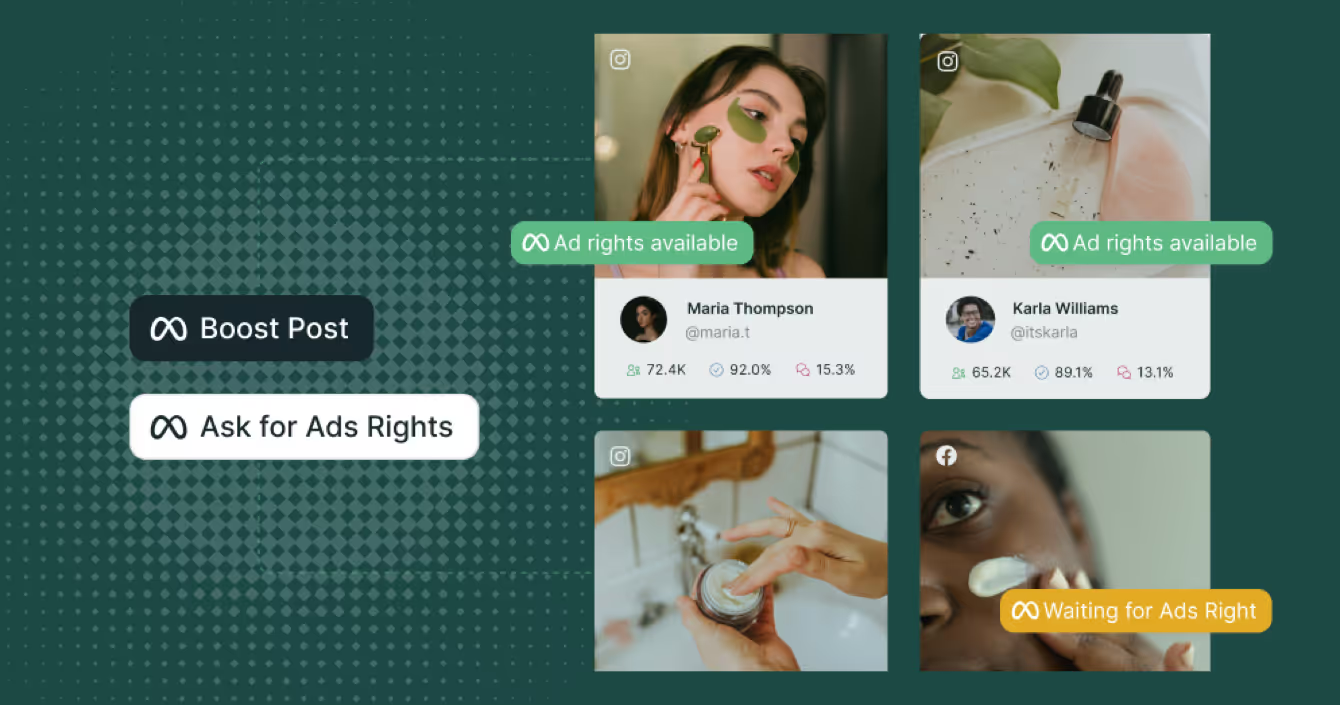
- Whitelisting/Partnership Ad rights: Separate permission to run ads directly from the creator’s social media handle.
- Term: How long you have the rights to use the content (e.g., 6 months, 1 year, or in perpetuity).
- Modification: Any restrictions on how the content can be edited.
Properly securing rights protects your brand and respects the creator’s work, ensuring compliance with disclosure guidelines.
Step 3: Identify Your High-Performing Content
Don't guess what will work in paid. Instead, let organic data be your guide. Analyze organic performance to identify content that is already resonating. Look for high engagement rates, but pay special attention to saves and shares, as these signal high user intent and value.
Beyond quantitative metrics, perform a qualitative analysis. Does the content tell a compelling story? Is the visual quality high? Does it align with your brand’s messaging? Remember that a post that went viral with a creator’s warm audience may not perform the same with cold ad audiences. You need a mix of proven engagement and strong brand alignment to supercharge your paid ads funnel with the right influencer content.
Step 4: Choose Your Advertising Method
You have 3 primary methods for running influencer content as a paid ad. Each offers a different balance of authenticity, control, and complexity.
1. Repurposing content (brand-run ad): You download the creator’s photo or video and run it as a standard ad from your brand’s ad account.
- Pros: Full control over targeting and budget; easy to set up.
- Cons: Lacks the social proof of the creator's handle, making it look more like a traditional ad.
2. Boosting a post: You add budget directly to an influencer’s existing organic post on their feed to amplify its reach.
- Pros: Quickest way to promote content; leverages existing social proof (likes, comments).
- Cons: Limited targeting and optimization options and less control over the ad experience.
3. Partnership Ads: You run a new ad through the influencer’s handle, giving you full control over the creative, copy, targeting, and budget. This is the most powerful method.
- Pros: Combines the highest level of authenticity with complete campaign control.
- Cons: Requires a higher level of trust and technical setup, as the creator must grant you advertising permissions.
Step 5: Build, Test, and Optimize Your Campaigns
Launching the ad is just the beginning. Treat influencer content with the same rigor you apply to any other performance creative and optimize relentlessly.
- Run always-on campaigns: Maintain a consistent rotation of IGC in your ad account to provide constant social proof and gather data.
- Build for placement: Don't just run the same square image everywhere. Edit creative to fit natively in each ad placement (a 9:16 vertical video for Reels and Stories, a 4:5 image for the feed, and a 16:9 video for YouTube).
- Test relentlessly: A/B test everything. Pit different creators against each other, test new headlines, try various creative formats, and experiment with different calls-to-action to find what drives the best results with your paid audiences.
For a deeper dive, explore these insider tips for optimizing paid ads and learn how to convert creator content into high-impact ads.
Measuring Success: How to Track Your Real ROI
To prove the value of this strategy, you must connect your campaigns to business-critical KPIs like Return on Ad Spend (ROAS), Cost Per Acquisition (CPA), and Conversion Rate.
But we know managing this attribution across dozens of creators can be complex. This is where a dedicated platform becomes invaluable. Aspire’s CreatorAds Suite streamlines this process, allowing you to not only manage organic influencer campaigns, but also gain usage rights, boost posts into paid ads, and see performance all in one place. It makes it possible to track your real influencer ROI in just a few clicks.
Make Your Ads Work Smarter, Not Harder
Integrating influencer marketing in paid advertising is a strategic imperative for brands that want to build trust, create high-performing ads, and grow efficiently. By leveraging authentic creator content, you can break through audience apathy, defeat creative fatigue, and ultimately drive a stronger return on your investment.
Ready to transform your paid ads from interruptive messages to welcome recommendations? Book a demo of Aspire to see how you can streamline the whole process.