5 Compliance Guardrails to Set Before You Boost Creator Content

Boosting a creator's post makes it your brand's advertising. Here are 5 compliance best practices for disclosure, usage rights, platform rules, and clearances.
77% of marketers now repurpose creator content in paid social, but this comes with legal implications.
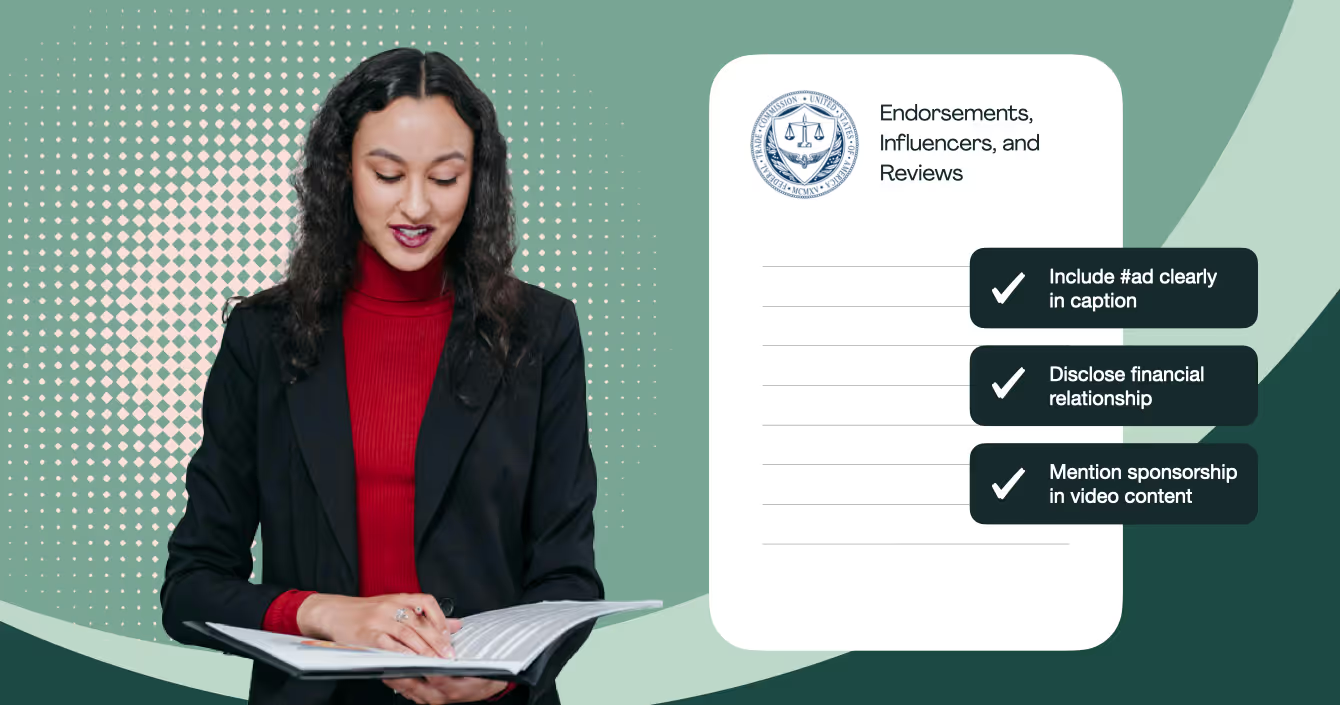
Sponsored creator content needs to follow FTC guidelines from the start. Most programs handle the organic side fine. The creator discloses the partnership, usually by including a clear “#ad” in their caption or with a native paid partnership tag.
But putting paid spend behind that post adds another compliance layer on top of that. You pick the audience, set the budget, and decide how long it runs, which makes your brand the one distributing the advertising. Platform ad policies, the license in the creator's contract, and your own claims exposure all come into play.
To help you avoid getting into legal trouble, we compiled 5 best practices to follow before you put budget behind a creator’s post.
Note: This article is for general informational purposes and is not legal advice. Rules and platform policies change, and obligations vary by jurisdiction, category, and contract. Work with qualified counsel on your specific program.
1. Strengthen disclosure and claims review before you boost.
Whether you’re working with a creator via organic or paid social, the FTC's Endorsement Guides require disclosure of any material connection between creator and brand, and that disclosure has to be difficult to miss. Our guide to FTC guidelines for influencer marketing covers how to get that right.
But a disclosure that works on an organic post doesn't always work once that post is an ad. Here’s what to watch for once creator content is running as an ad:
- The disclosure has to live in the creative. Ad placements crop captions differently and some strip them almost entirely, so caption-based disclosure gets unreliable the moment you boost. On-screen text in the first few seconds is the only version that travels with the asset regardless of placement. Platform labels like Instagram's "Paid partnership with" tag help, but treat them as one layer rather than a substitute.
- You’re on the hook for what the creator says. Advertisers can be liable for false or unsubstantiated claims in an endorsement. The FTC expects you to brief endorsers, monitor what they publish, and act when something is off. In fact, it’s advised that you should continue monitoring through the contract and for a reasonable period after.
- Claims substantiation matters more in paid. A creator saying a serum "cleared my skin in a week" is an efficacy claim you now need support for, amplified to an audience that never chose to follow her. Regulated categories (supplements, financial services, health, alcohol, minors) need claims review before the boost.
- The Consumer Reviews and Testimonials Rule raised the stakes. Since taking effect in late 2024, this rule lets the FTC seek civil penalties for conduct like undisclosed insider reviews and charge financial penalties.
2. Pay attention to usage-rights windows.
When it comes to usage rights, most influencer agreements grant a license rather than total content ownership. That license spells out where the content can run, in which markets, and for how long.
But paid media channels don’t enforce those limits on its own, because the Ads Manager doesn’t innately know what’s in your contract.
A winning asset could get duplicated into new ad sets, folded into an Advantage+ campaign, copied into a retargeting flow, and pulled into a seasonal push 9 months later by someone who wasn't in the original briefing. At this point, the license has expired but you’re still putting spend behind the creator’s content, which leaves you making unlicensed commercial use of someone's name, likeness, and creative work.
Here are a few guardrails to keep this from happening:
- Store the license window as data, with full visibility across the team. Put a date field on the asset, visible to the paid team, with an owner. A clause in a PDF in the influencer marketing manager’s Google Drive won’t cut it.
- Watch both clocks. Platform permissions and your usage license may expire on different schedules. For example, a creator’s Spark Ad code might be good for a year, but that doesn’t extend the 90-day license you agreed on.
- Alert before expiry. Set a reminder 30 days out from the expiration date to give yourself time to renew or plan the swap.
- Define the default when a window closes. Either the asset auto-pauses or someone owns the renewal. Ambiguity is what produces overruns.
- Buy longer windows on assets you expect to scale, if your budget allows. Securing 12 months upfront beats renegotiating from zero leverage after the asset proves itself.
- Check that the license covers what you're doing. Paid social, retail media, CTV, and out-of-home are different grants, as are different markets. A US-only license does not cover an EMEA test. Read the takedown clause, too. If the creator can require removal, know the notice period before you build a quarter's plan on the asset.
3. Align exclusivity terms with your paid usage window.
Exclusivity clauses are typically built around one-off posts. Paid rotation changes that for both parties:
- Their exclusivity, against you: A creator may be under a category-conflict clause with another brand, sometimes signed after your shoot. If your ad is still running from their handle in a category they've since locked up, you're the visible party in someone else's breach. Contracts should require conflict disclosure for the duration of your paid usage, not just through the posting date.
- Your exclusivity, against them: If you bought category exclusivity, the window needs to cover your paid usage window. 60 days of exclusivity against 6 months of paid rotation means you're spending media dollars promoting a creator who is, entirely within their rights, promoting your competitor.
Brand safety matters more in paid, too. When your budget sits behind a creator's handle, their subsequent posts become a reputational adjacency you never approved, and if something goes wrong, you’re paying to push it to more people.
To avoid getting caught in this scenario, write a conduct clause that says what triggers a pause, designate one person internally who can stop the spend that day, and settle upfront what happens to your usage license if you end things over conduct.
4. Layer platform rules on top of FTC requirements.
The FTC sets the law. Platforms like Meta, TikTok, and YouTube set contractual requirements through their ad and branded content policies, and they enforce faster, because enforcement is just a switch.
Here are the platform rules you need to know about:
- Meta: Where a commercial relationship exists, Meta expects the branded content tools used and the paid partnership label applied. Partnership Ads run from both handles with the label built in, which is a compliance advantage. Creator permission is required and can be withdrawn, and certain categories are restricted outright, so confirm your vertical is eligible before planning around the format.
- TikTok: Creators must enable the Commercial Content Disclosure setting for anything promoting a brand, product, or service, whether the trigger is payment, a promo code, gifted product, or a call to action. Improperly disclosed commercial content becomes ineligible for the For You feed, so a missing toggle is a reach problem before it's a legal one. Spark Ads then require a per-video authorization code, and the Branded Content Policy prohibits some categories entirely.
- YouTube: Creators check the paid product placement box, which surfaces an "Includes paid promotion" notice. YouTube is explicit that the checkbox doesn't discharge anyone's separate legal obligations. Partnership Ads run through Google Ads on creator-granted permissions, with Google's ad policies layered on top.
In short, proper disclosure means something different on each platform. Before you boost, confirm that disclosure is on, whether it’s the Meta label, the TikTok toggle, or the YouTube checkbox.
5. Clear all creative elements before you boost.
In many cases, a paid ad is held to a higher standard than an organic post. Here are the 4 creative elements to pay attention to before you put spend behind a creator’s post:
- Music: The trending sound a creator used organically is almost certainly not cleared for your advertising. Platform sound libraries are licensed for organic, personal use. Commercial use generally requires the platform's commercial library (e.g. TikTok's Commercial Music Library, Meta's Sound Collection) or a negotiated sync license. Note that a Spark Ad keeps the original post's audio. So if your TikTok creator partnership includes paid amplification, put the audio requirement in the initial brief and capture the sound source at submission.
- Third-party IP in frame: Other brands' logos and packaging, art on the wall, a game on screen, a licensed character on a t-shirt are typically tolerated in organic, but can become a strategic/legal problem in an ad.
- Likeness and right of publicity: Everyone recognizable needs to have consented to commercial use, not only the creator you paid, whether it’s their partners, friends, collab creators, or identifiable bystanders. Children need verifiable guardian consent, and a creator's own kids are the most common gap. Publicity rights vary enough by market that your counsel's read should govern.
- AI-generated or modified elements: Platform rules on AI-generated media are tightening. If a creator used a generative tool anywhere in the asset, you’ll want to know what tool, what it produced, whether the output is licensed commercially, and whether any real person's voice or likeness was synthesized. Ask at submission.
Build compliance into your brief
The content doesn't change when you put budget behind it, but your obligations do. Sorting out disclosure, licenses, and clearances upfront costs a few minutes per asset, which is a lot cheaper than pulling a campaign or renegotiating with a creator who suddenly has leverage. So, build these compliance checks into your brief from the start to avoid legal risks down the line.
Rather not manage all this in-house? Our new Paid Partnership Ads program handles the organic-to-paid process end to end, with rights and compliance secured at the brief. Book a call to learn more.