How Influencer Marketing Powers Paid Media Performance

Learn how to integrate influencer marketing into your paid advertising. Use creator content and Partnership Ads to boost ROAS and build authentic campaigns.
Your highest-performing ad this quarter might already be live. It’s sitting in your influencer program right now, racking up comments and saves, from a creator your team partnered with last month. The problem is that most brands treat that content as a one-and-done organic post, then turn around and spend a fortune producing polished studio creative that consumers scroll right past.
Ad fatigue is real, and it is expensive. Audiences have learned to tune out the glossy brand spot. What still stops the scroll is content that looks like a recommendation from a real person.
That’s why 69% of brands say influencer content outperforms brand-directed content, and adding Partnership Ads to always-on campaigns boosts click-through rates by 53%. That means the smartest move is not to make more ads. Instead, take the creator content you already have and put a media budget behind it.
This guide walks through why creator content wins in paid, a step-by-step playbook for turning organic posts into high-performing ads, and how to measure the ROI so you can prove it to your CFO.
Why Creator Content Is Your Unfair Advantage in Paid Ads
Before we get tactical, it helps to understand why this works so well.
Authenticity Builds Trust
People trust people more than they trust brands. An incredible 69% of consumers trust recommendations from influencers over messaging that comes directly from a brand. When you put paid spend behind a creator's post, you borrow that credibility and turn it into social proof at scale.
This is why using creator content for ads warms up cold audiences in a way brand creative rarely can. The ad does not feel like an ad. It feels like a tip from someone the viewer already follows or relates to. Paid media campaigns benefit from influencer content because it retains the authenticity of the influencer's voice, even when amplified through paid channels.
Relatability Beats Ad Fatigue
Creator content feels native to the feed. A vertical clip shot on a phone in someone's kitchen blends into the scroll. On the other hand, a high-production brand spot announces itself as an interruption.
Influencer content helps fight ad fatigue because it is fresh and comes from a person, not just a brand, which keeps people interested longer. That relatability is exactly what stops the scroll and earns engagement that polished creative struggles to match.
Algorithms Reward Engagement
For performance marketers, higher engagement is not just a vanity metric. Platforms like Meta and TikTok read engagement as a relevance signal, and they reward relevant ads with lower costs.
The numbers back this up. Ads powered by creator content lead to 4x higher click-through rates and a 50% lower cost-per-click, and in some cases, even better results. For instance, Veradek’s Partnership Ads, powered by creator content on Aspire, saw 9.7x total ROAS from paid campaigns, 23% lower CPA, and a 9.3% increase in conversion rate.
Your influencer team is sitting on the ingredients every paid team wants: a high volume of fresh content, produced quickly, in many different styles. As our Head of Strategy put it, those are the exact ingredients needed to improve paid ad performance through faster creative testing.
The Playbook: Turning Creator Content Into High-Performing Ads
Knowing creator content works is one thing. Operationalizing it is another. Here is the 5-step workflow that takes a post from a creator's feed to a paid conversion.
Step 1: Secure Content Usage Rights Upfront
You cannot legally run a creator's content as a paid ad without explicit permission. Sort this out before the partnership begins, not after a post takes off.
Build clear usage rights into every creator contract. Spell out:
- Which channels you can run the content on
- How long you can use it, including renewal terms
- Whether you can edit, crop, or remix the original
Doing this manually across dozens of creators gets messy fast. Aspire builds rights management directly into the workflow. When you send a brief, you can flip on a simple toggle so you have permission to use the content in ads from day one.
Step 2: Identify High-Performing Organic Content
Your organic posts are a free testing ground. Before you spend a dollar amplifying anything, look at what is already resonating.
Watch the engagement signals that indicate real interest: comments, shares, and saves tend to predict ad performance better than likes alone. Content that performs organically gives you a head start because the audience has already told you it works. That de-risks your ad spend before it begins.
At the same time, keep in mind that organic performance is a strong signal, but it is not the only one. You should pick content based on performance, but not rely only on organic results. Some content underperforms organically simply because it reached a small audience, then takes off once you add targeting and budget.
Step 3: Repurpose and Optimize Content for Ad Formats
Do not just hit boost. Boosting a post leaves performance on the table. The goal is to adapt creator content into formats built for conversion.
Practical repurposing tactics:
- Re-edit videos for each placement. Use 9:16 for Reels and TikTok, 1:1 or 4:5 for feed, and trim longer clips to fit shorter slots.
- Add conversion-focused elements like text overlays, captions, and a clear call to action so the message lands even on mute.
- Create multiple variations to test different hooks, music tracks, and copy against each other.
Adapt for format and add light captions or CTAs for clarity, but not over-polish it. The whole point is that the content stays relatable. Over-editing it back into a brand ad defeats the purpose. The winning formula is to start with creator content, then layer in smart post-production edits that make it more conversion-focused.
Step 4: Launch Campaigns with Partnership Ads
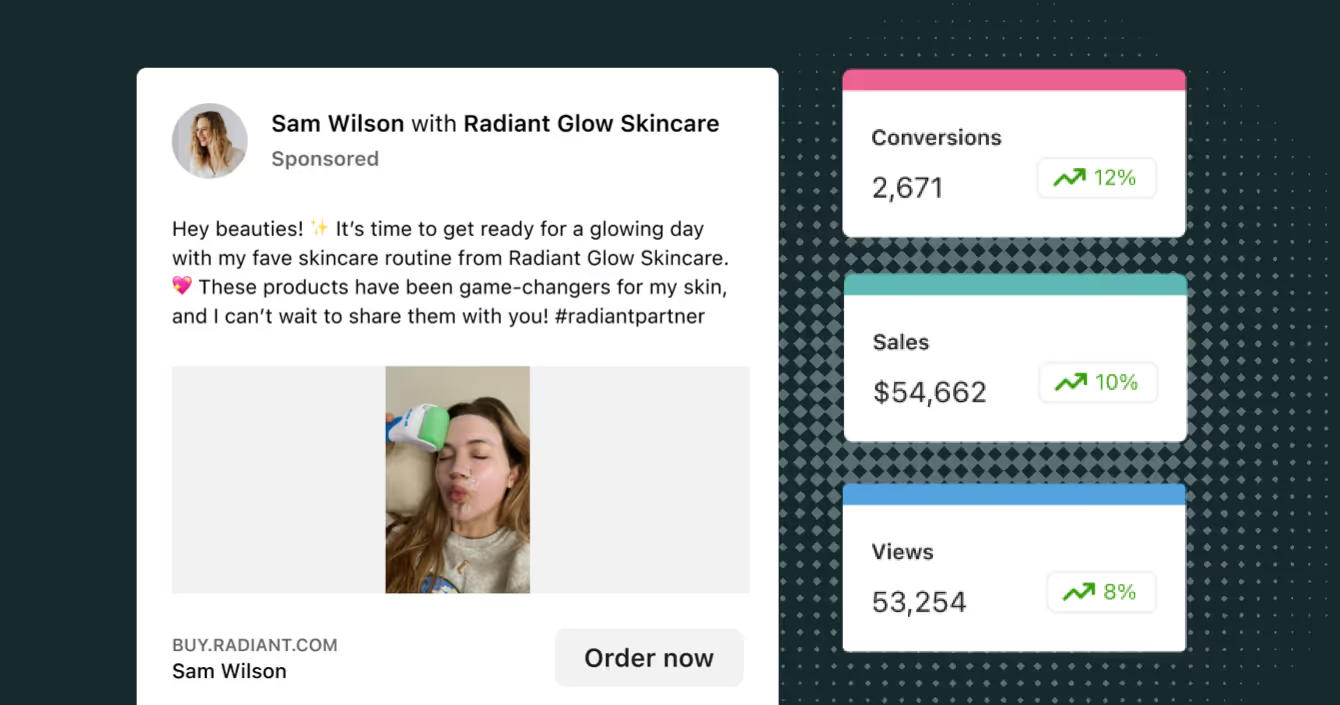
This is the gold standard for the strategy. Partnership Ads are paid ads on Instagram and Facebook that run from a creator's profile while being funded and managed by the brand. They carry a "Paid Partnership" label, so audiences know it is sponsored, and they pull in the credibility of creator endorsement combined with the targeting power of paid advertising.
The reason they outperform standard ads is because Partnership Ads use signals from both the creator's and the brand's accounts, which improves ad ranking and transparency. The creator tags your brand as a partner, you approve the collaboration from Ads Manager, and you amplify it as a targeted campaign.
How do Partnership Ads differ from a standard boosted post or a dark post? A boosted post simply pushes more budget behind something on your own brand page. A dark post is brand-run creative that does not appear on your timeline. Meanwhile, a Partnership Ad runs through the creator's handle, so it inherits their voice and audience trust while you keep full control over targeting and spend. That distinction is what drives the performance gap.
The results are measurable. Partnership Ads deliver a 30% lower CPA and 53% higher CTR, with a 19% lower CPA when added to always-on campaigns compared to business-as-usual ads.
TikTok has its own version, Spark Ads, which lets you run paid spend behind a creator's organic post. TikTok Spark Ads generate 142% greater engagement than non-Spark Ads. YouTube’s version (which is also called Partnership Ads) lets brands use organic creator videos in ad campaigns across the funnel. Across platforms, the mechanic is the same: keep the creator's identity attached to the ad, and let the algorithm reward the authenticity.
Step 5: Test, Analyze, and Iterate
Treat this as a continuous loop, not a launch-and-forget. The brands that win run rigorous A/B tests and feed the learnings back into their creator strategy.
Start with the head-to-head test that settles the internal debate: creator content against your studio-shot brand ad. 9 times out of 10, creator content wins. To run it cleanly in Ads Manager, build 2 ad sets targeting the same audience with the same budget, change only the creative, and let ROAS and CPA tell you the answer.
From there, keep testing the variables that matter:
- Different creators against each other to find who converts
- Different hooks and opening seconds
- Different CTAs and copy treatments
Every test teaches you something about which creators and creative angles drive revenue. Use those insights to sharpen your next round of creator selection and briefs. That feedback loop is how influencer and performance teams achieve breakthrough impact by working in a single funnel.
Measuring What Matters: Proving the ROI of Your Paid Creator Strategy
If you want budget to scale this, you need to prove it in dollars. That means moving past engagement and tying creator-powered ads directly to revenue.
Engagement tells you the content resonates. It does not tell you whether it pays. To make the case for influencer marketing in paid advertising, track bottom-of-funnel metrics that map to business outcomes.
The KPIs that matter for paid creator content:
- Return on ad spend (ROAS)
- Cost per acquisition (CPA)
- Click-through rate (CTR)
- Conversion rate
- Attributed revenue from promo codes and affiliate links
Use UTM parameters on every paid creator campaign so traffic shows up cleanly in your analytics. Layer in affiliate links and unique promo codes per creator so you can tie a specific sale back to a specific post and a specific creator. That connection between affiliate data and ad performance data is what lets you say exactly which creator content drove which revenue.
Note that there is no single “right” ratio to break down your budget, but a good starting point is to keep your organic influencer program funded enough to produce a steady stream of fresh content, then route paid amplification toward the posts that prove themselves. The organic program becomes your creative pipeline, and paid spend scales the winners.
The most common mistakes brands make here are skipping the rights conversation, over-editing creator content until it looks like a brand ad, boosting posts instead of building proper campaigns, and measuring only engagement. Avoid those 4 and you are ahead of most of the market.
How to Scale Your Program With the Right Platform
Running this once is straightforward. Running it across dozens of creators, multiple platforms, and an always-on calendar is where teams hit a wall. Rights live in email threads, content files get scattered, and organic and paid reporting sit in separate tools that never talk to each other.
A unified platform closes that gap. Aspire connects creator partnerships to real revenue through tracking links, promo codes, co-branded storefronts, and paid amplification, with attribution to show exactly what is working.
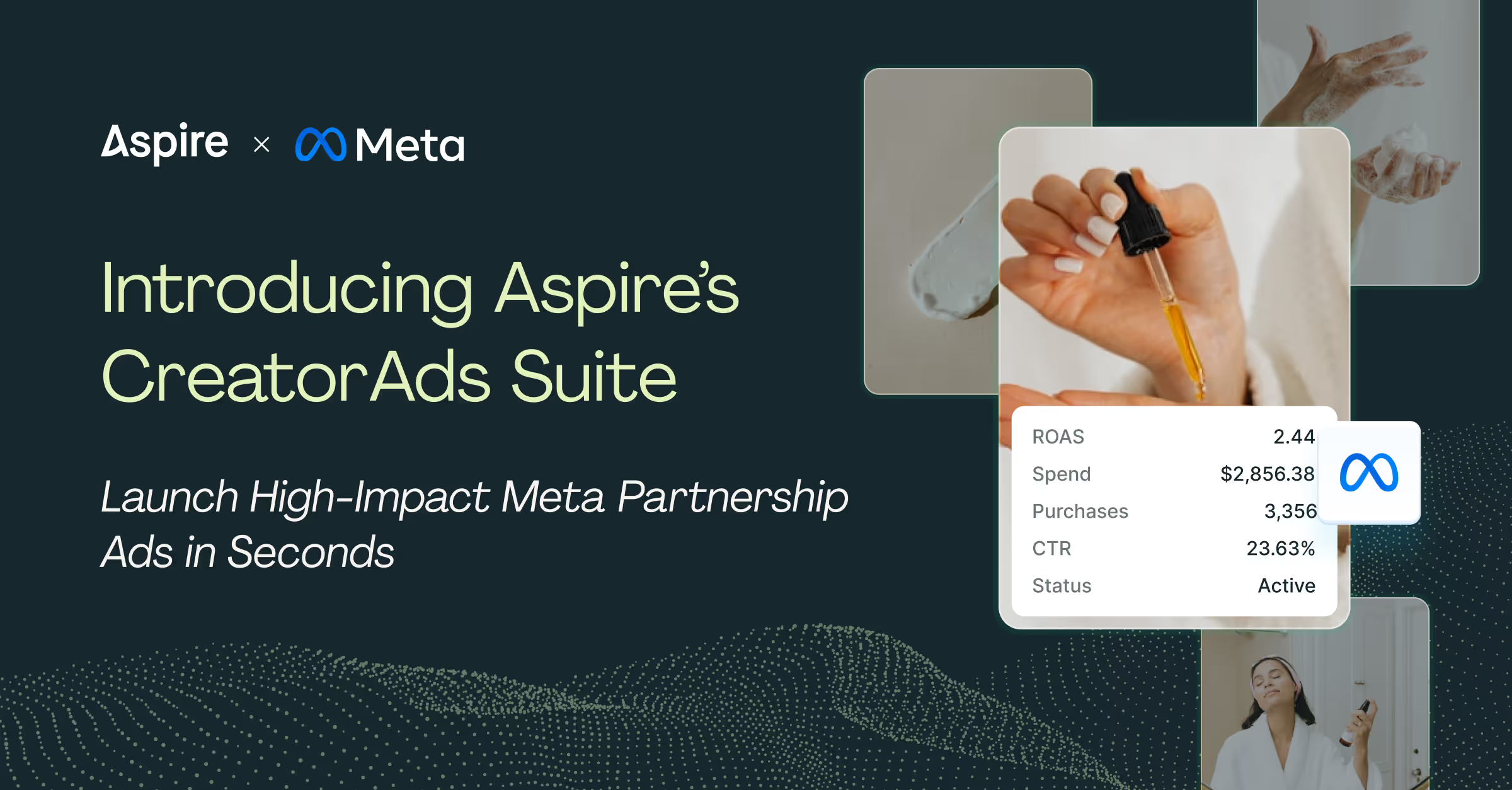
Best of all, Aspire has first-party integrations with Meta, TikTok, and YouTube, which means requesting ad permissions and boosting posts happen inside the same platform you use to find, manage, and communicate with creators. In fact, Aspire’s CreatorAds Suite streamlines the entire organic-to-paid workflow:
- Request ad permissions in one click. When a creator tags your brand as a paid partner on Instagram, Aspire automatically surfaces the post so you can request ad rights directly (no DMs or emails needed).
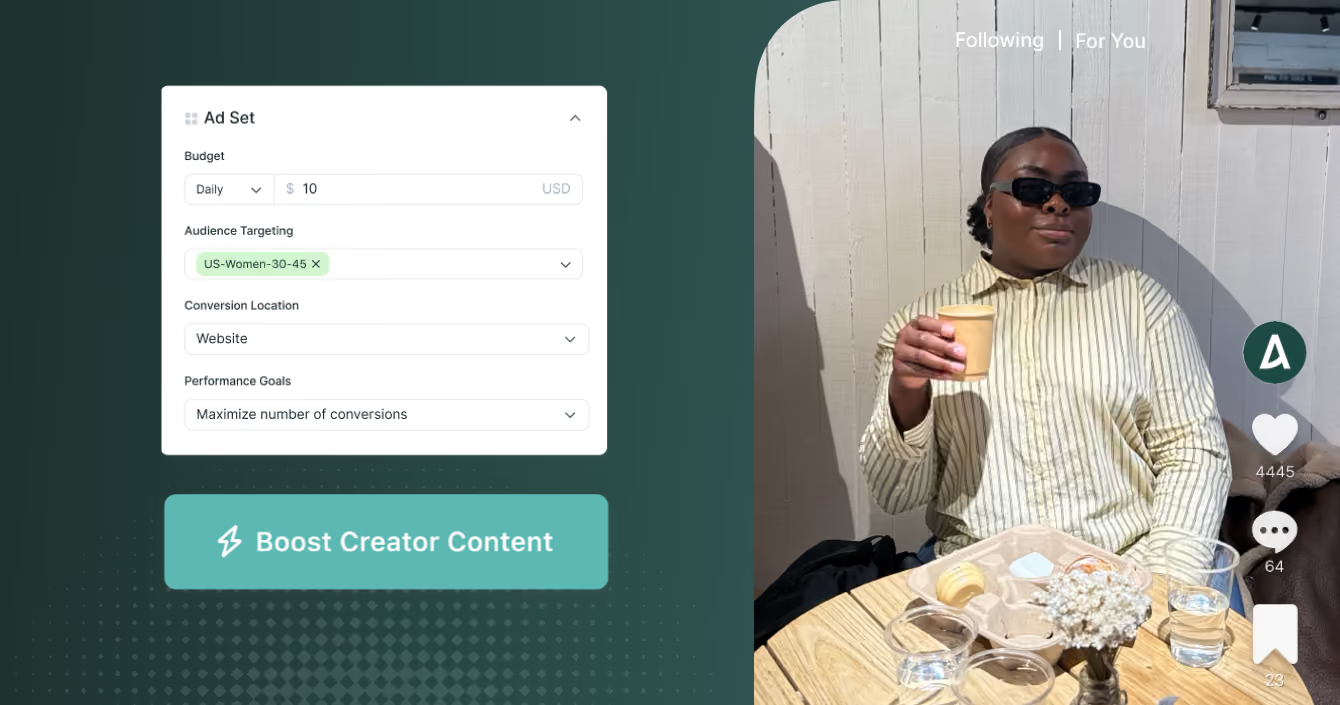
- Boost posts within Aspire. Once rights are granted, you can boost the creator’s post directly within Aspire. Choose your campaign objective, set your budget and schedule, define targeting, and preview placements.
- Track performance in one dashboard. View paid ad metrics like impressions, clicks, and conversions alongside organic post metrics. Easily compare results across creators and campaigns to double down on what’s working.
Power Your Paid Media with Creator Content
Creator content builds the trust that brand creative cannot manufacture, and it beats ad fatigue because it looks like a recommendation instead of an interruption. That combination shows up directly in your CPC, CTR, and ROAS.
For all future influencer campaigns, secure usage rights upfront, find the organic content that already works, repurpose it for each placement, run it as Partnership Ads through the creator's handle, then test and iterate against your brand creative. Measure it down to attributed revenue so you can prove the value and scale the budget.
Your best ad is probably already made. All you have to do is identify top performers and put a media budget behind it.
Ready to turn your creator content into your highest-performing paid creative? See how Aspire's full-service team can help you build, launch, and scale your creator ad program from strategy through media buying.