Partnership Ads Playbook: Turning Creator Assets into High‑Impact Campaigns

Turn creator content into high-performing Partnership Ads with a 5-step playbook for rights, testing, scaling, and measuring ROI.
Audiences have learned to scroll past ads, whether it’s polished studio creative, glossy product shots, or the same brand messaging repeated across every placement. And even when they do notice ads, many don’t trust it.
The good news is that there’s a better way. Take the content your creators make (AKA the posts their audiences already trust) and put paid budget behind it. That’s what a Partnership Ads strategy does, pairing the credibility of a real recommendation with the targeting and scale of paid media.
This playbook walks through the whole process, from securing content rights to measuring return, so you can build a repeatable system for turning creator assets into your best-performing ads.
Why Your Paid Ads Need Creator Content
Ad fatigue is real. When your audience sees the same branded creative on repeat, performance drops and costs climb. Creator content solves this because it does not look or feel like an ad. Instead, it feels like a friend showing you something worth buying. And with the rise of ad-blocker usage and growing consumer distrust in traditional advertising, influencer content outperforms.
The shift toward influencer-generated content in paid is already well underway. The influencer marketing market is projected to reach roughly $39.33 billion in 2026, up from just $1.7 billion ten years ago. Plus, 77% of marketers actively repurpose creator content in paid ads. It’s the key to how performance marketers keep their creative fresh and their costs down.
The reasons brands make the switch come down to a few clear benefits:
- Beating creative fatigue: A steady stream of creator content gives your ad account fresh assets to rotate, so audiences do not get worn out on one creative.
- Building trust at scale: Creator recommendations carry the weight of a peer endorsement, which studio ads cannot replicate.
- Faster campaign turnaround: Creators already have content ready to go, cutting the time you would otherwise spend producing new creative from scratch.
- Better economics: Authentic creator content tends to earn stronger engagement, which lowers your cost per click and stretches your budget further.
The strategic advantage comes from combining both worlds. Pairing the authentic trust of a creator's recommendation with the precision targeting and scale of paid advertising gives you the best of both approaches.
The Key Terminology You Need to Know
Before you build campaigns, you need to speak the language. These terms come up constantly, and knowing the difference between them keeps your strategy sharp.
Partnership Ads (Meta)
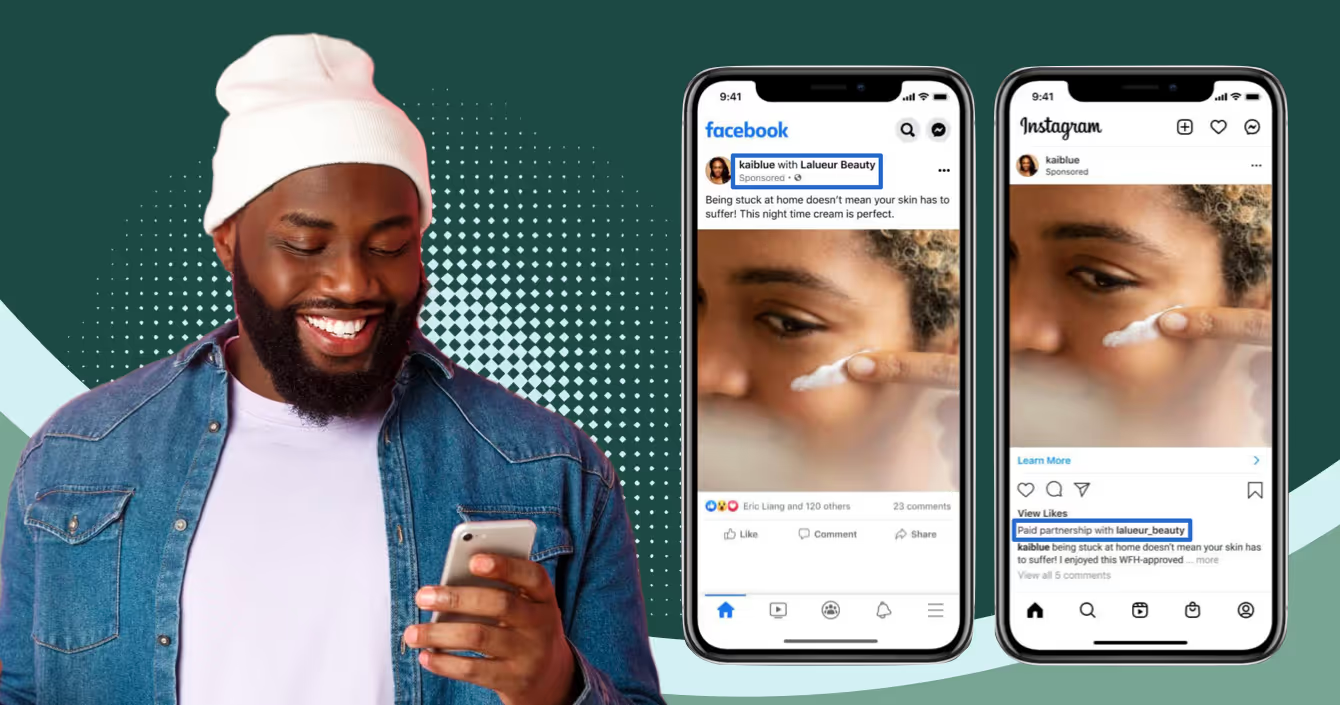
Partnership Ads are Meta's format for running an ad through both a brand's and a creator's accounts at the same time. The ad shows a "paid partnership" label, so the collaboration is transparent, and it runs from the creator's handle while the brand funds and manages it. As Aspire explains, Partnership Ads are the most performant and transparent way for advertisers and creators to run ads together to drive business outcomes.
Spark Ads (TikTok)
Spark Ads are TikTok's version of the same idea. You take an existing organic post from a creator's account and boost it as a paid ad, keeping all the original likes, comments, and shares. Boosting creator content this way can increase reach and drive higher ROI.
Allowlisting (or Whitelisting/Creator Licensing)
Allowlisting, sometimes called whitelisting or creator licensing, is when a creator grants your brand permission to run ads directly through their social handle. The content publishes from the creator's account, but your brand funds the media and controls the targeting.
Dark Posts
Dark posts are ads that run through a creator's handle but do not appear as organic posts on their feed. They only show up in front of the audiences you target, which lets you test many variations without cluttering the creator's profile.
Boosting vs. Partnership Ads
Boosting and Partnership Ads sound similar, but they work differently. Boosting typically means putting spend behind a post to expand its reach, often from your own brand account. Partnership Ads run through the creator's handle with the paid partnership label, keeping the endorsement front and center.
There are 3 main ways to bring creator content into paid social:
- Standard ads run through your own account
- Whitelisted ads published through the creator's handle
- Brand partnership ads that signal a formal collaboration between the two
In other words, brands can buy the rights to a piece of influencer content and run it through their own channels, or run it through the influencer's own account.
A 5-Step Playbook for High-Impact Partnership Ads
Here is the practical part. Follow these five steps to build a system that turns creator content into paid campaigns you can trust and scale.
Step 1: Secure Content Usage Rights from the Start
You cannot legally run a creator's content as a paid ad without the right permissions. This is the non-negotiable first step, and the best time to handle it is at the contract stage.
We recommend building these terms into every creator agreement:
- Which channels the content can run on across social platforms
- Duration of usage rights, typically 6 to 12 months minimum
- Permission for paid promotion and boosting
- Permission to make post-production edits and modifications
Frame it as a collaboration, not a demand. If you already know you want to test a creator's content in ads, negotiate paid usage rights into the brief from day 1. To sweeten the ask, tie usage rights to performance bonuses so creators share in the upside. Superfiliate makes the same point, advising brands to secure paid rights early and build whitelisting into briefs and contracts from the beginning [5].
Step 2: Identify High-Performing Organic Content to Amplify
Do not guess which content will work as an ad. Let the data tell you. Monitor engagement metrics like comments, shares, saves, and watch time to find content that is already resonating with an audience.
To start scaling your ads with creator content, start by identifying your best-performing organic creator posts. If a post is earning strong organic traction, that is a signal it can perform even better with paid spend behind it.
If you are working across many creators and struggling to spot the winners, an influencer platform can surface top-performing posts automatically. Aspire's tools help brands identify and boost top-performing influencer posts, turning organic wins into scalable advertising assets.
Step 3: Repurpose and Optimize Content for Ad Formats
Don’t just boost a single creator post and call it a day. One piece of content can become many ad variations, and testing them shows you what resonates most. Try some of these best practices:
- Pull high-quality still images from a video to test as static ads.
- Add text overlays, captions, or stickers to make the content feel native to each platform.
- Re-cut longer videos into short, punchy clips for TikTok or Instagram Reels.
- Crop videos into vertical 9:16 for Reels and TikTok, or square 1:1 for in-feed placements.
The goal is to make each asset feel native to its channel while keeping the creator's authentic voice. Don’t add corporate voiceovers or overly branded edits. Instead, let the creator's tone lead, keep captions conversational, and use minimal text overlays. Keep the creator's natural tone and avoid over-editing the content.
Step 4: Launch Your Campaigns via Creator Handles
Running ads through a creator's handle requires a technical link between their account and yours.
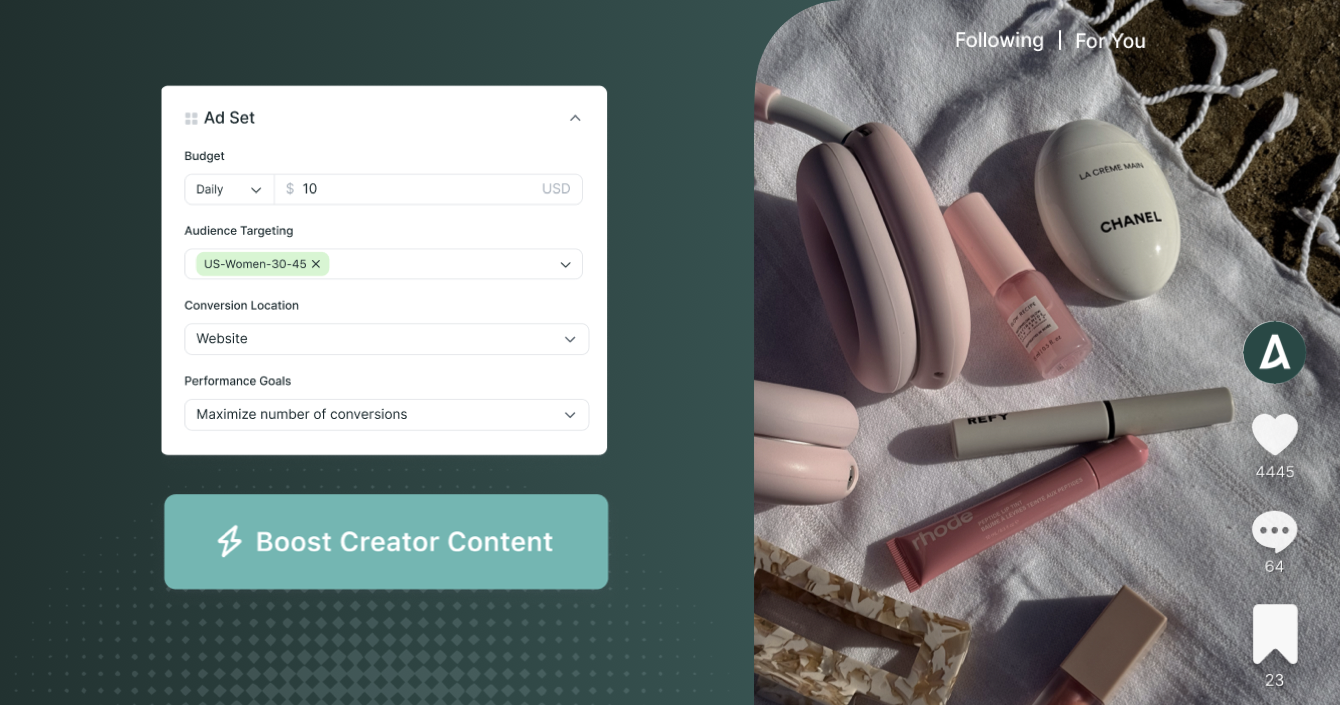
On Meta, this happens through Partnership Ad codes and permissions. The creator grants your brand permission to run their content as a Partnership Ad, then you set your budget, targeting, and campaign goals.
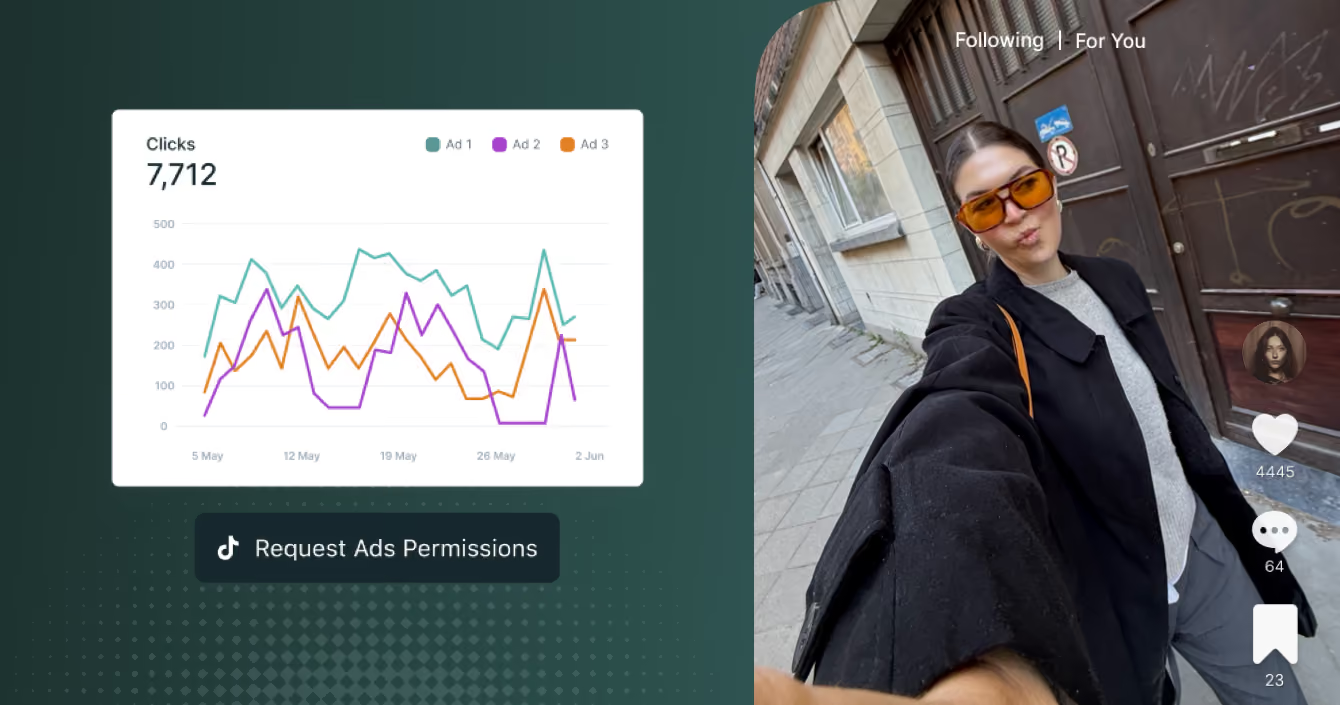
On TikTok, this happens through a Spark code. The creator toggles on ad authorization, chooses a duration, and copies the Spark code to share with your brand or agency. You cna then paste the creator's Spark code into TikTok Ads Manager, confirm the post, and set your targeting and budget.
And on YouTube, it happens through video linking, or the technical connection between the creator's video and your Google Ads account. There are two main ways to set it up. In creator-initiated linking, which is recommended, the creator adds you as a brand partner during upload in YouTube Studio. In advertiser-initiated linking, you send the request from Google Ads and the creator approves it on their end.
Step 5: Test, Analyze, and Scale What Works
Treat your creator ads like a lab. Take a hypothesis-first approach, where each test answers a specific question like "Does a direct-to-camera hook outperform a product unboxing?" or "Does this testimonial drive a lower CPA?" Isolate one variable at a time, whether it is the hook, the call to action, or the caption.
Then systematically A/B test creator content against your existing branded creative to prove what resonates. Build an evergreen creator asset library and test relentlessly, with winners earning the budget. As you learn, build a record of which creators, formats, and messaging hooks perform best, then pour spend into the proven winners and keep refreshing creative to prevent fatigue.
Measuring What Matters: Proving the ROI of Your Creator Ads
Fresh creative is worthless if you cannot connect it to business results. These are the metrics that matter for creator-powered campaigns, and each one tells you something different about performance.
Return on Ad Spend (ROAS)
ROAS measures the revenue you earn for every dollar you spend on ads. It is the headline number for any performance marketer. Industry benchmarks put the average influencer marketing return at about $6.50 for every $1 spent, with top campaigns reaching as high as $18. Our own paid solution, CreatorAds Suite, is built around helping brands win with high-ROAS ads powered by creators, since authentic content tends to convert better than studio creative.
Cost Per Acquisition (CPA)
CPA tells you what it costs to win a single customer. Creator content often lowers this number because it engages audiences more efficiently. Ads featuring UGC can see a 50% reduction in cost-per-click compared to ads without it, which flows directly into a lower CPA. For a deeper look at the economics, Aspire covers how brands use creator ads to cut advertising costs.
Click-Through Rate (CTR)
CTR shows how compelling your ad is at getting people to act. A high CTR means your creative is stopping the scroll and earning the click. Creator content typically drives stronger CTR than branded ads because it feels native to the feed and carries a trusted voice, which is exactly why authentic content outperforms.
Conversion Rate
Conversion rate measures how many people who click actually complete the action you want, whether that is a purchase, a signup, or an add-to-cart. This is where authenticity pays off. The most direct way to tie creator activity to sales is through affiliate links and promo codes, which let you track every click and conversion a creator drives.
Streamline Your Workflow with an End-to-End Solution
Running this playbook manually takes real time and effort. You chase down usage rights over email, export assets, upload them to Ads Manager, then piece together performance data from separate tools. Good strategies stall under that kind of friction.
Aspire built its CreatorAds Suite to remove that friction. It turns high-performing creator content into Meta Partnership Ads directly from the platform, which moves you from purely managing influencers to running an end-to-end organic-to-paid marketing solution. You keep proper attribution and usage rights the whole way through.
Inside the CreatorAds Suite, you can find creators, request ad permissions, and turn the best-performing organic content into paid ads without leaving Aspire. You set campaign goals, budgets, and targeting in one place, with no more chasing rights, exporting assets, or juggling platforms. The suite feeds top-performing content and creator insights back into your workflow, so your paid media team gets a steady stream of on-brand, ad-ready content and can measure impact through clicks, conversions, and ROAS.
With direct Meta integration, Aspire's CreatorAds Suite converts creator content into high-performing Partnership Ads on Instagram and Facebook while keeping the authentic appeal intact.
Frequently Asked Questions
What are Partnership Ads and how do they differ from regular influencer posts?
Partnership Ads are paid ads that run through a creator's handle with a "paid partnership" label, funded and managed by the brand. A regular influencer post is organic content the creator publishes on their own, with reach limited to their followers. Partnership Ads take that same authentic content and add paid targeting and budget, so it reaches far beyond the creator's existing audience.
What is whitelisting or boosting, and what are dark ads?
Whitelisting is when a creator grants your brand permission to run ads directly through their social handle. Boosting means putting paid spend behind a post to expand its reach. Dark ads, also called dark posts, are ads that run through a creator's handle but never appear on their public feed, showing only to the audiences you target.
Why combine influencer marketing with paid social instead of running each separately?
Running them together gives you the authentic trust of a creator's recommendation plus the precision targeting and scale of paid media. Organic creator content reaches a limited audience, and standard paid ads often get tuned out. Combining the two puts proven, trusted creative in front of new audiences you choose, which lifts performance for both.
How do you legally get rights to run ads through a creator's account?
Secure usage rights in the creator contract before any campaign begins. Specify the channels, the duration (6 to 12 months is standard), and permission for paid promotion and edits. On Meta, the creator grants Partnership Ad permissions; on YouTube, you set up video linking between their video and your Google Ads account.
What ROI can brands expect from turning creator content into paid ads?
Industry benchmarks put average influencer marketing returns at about $6.50 for every $1 spent, with top campaigns reaching up to $18. Ads featuring UGC can also see a 50% reduction in cost-per-click compared to ads without creator content. Results vary by brand, creative, and audience, so test against your own baseline.
How do you choose which creator content to turn into ads, and which platforms support this?
Start with your best-performing organic posts, using engagement signals like comments, shares, saves, and watch time to spot winners. Content that already resonates organically tends to perform even better with paid spend. Meta supports Partnership Ads on Instagram and Facebook, TikTok uses Spark Ads, and Google supports Partnership Ads for YouTube videos.
Beat Ad Fatigue with Creator Content
The case for creator content in paid ads is straightforward. Audiences trust real recommendations, and paid media gives those recommendations scale. Together they beat ad fatigue and deliver better economics than studio creative on its own.
The how is a repeatable process: secure rights upfront, find the content that already works, repurpose it for each format, launch through creator handles, and test until you find your winners. Then measure what matters, tracking ROAS, CPA, CTR, and conversion rate so every dollar earns its place.
The last piece is having a system that makes all of this manageable at scale. Ready to turn your best creator content into your highest-performing ads? Book a demo of Aspire's CreatorAds Suite and see how the whole playbook runs from one platform.