How Brands Leverage Creator Ads to Cut Advertising Costs

Learn how creator ads lower CPMs, boost CTR, and cut ad costs with a 5-step blueprint for scaling authentic paid social.
Ad costs keep climbing, and the same polished brand creative keeps burning out faster. If your CPMs are creeping up while performance slides, you already know the old playbook is fighting a losing battle.
The good news is that there's a better use of your budget. Creator ads (paid placements built on authentic creator content) consistently outperform brand-produced ads at a fraction of the cost. In fact, brands running them see 4x higher click-through rates and a 50% reduction in cost-per-click. On the ROI side, some report $5.20 back for every $1 spent.
The momentum behind this shift is clear. According to the IAB, US creator economy ad spend is projected to hit $37 billion in 2025, up 26% year over year and growing 4x faster than the total media industry, and a growing number of marketers are moving their budget to where it works harder.
This guide breaks down exactly how creator ads cut costs, mechanism by mechanism, and gives you a 5-step blueprint to put the strategy into action.
What are creator ads and why are they so cost-effective?
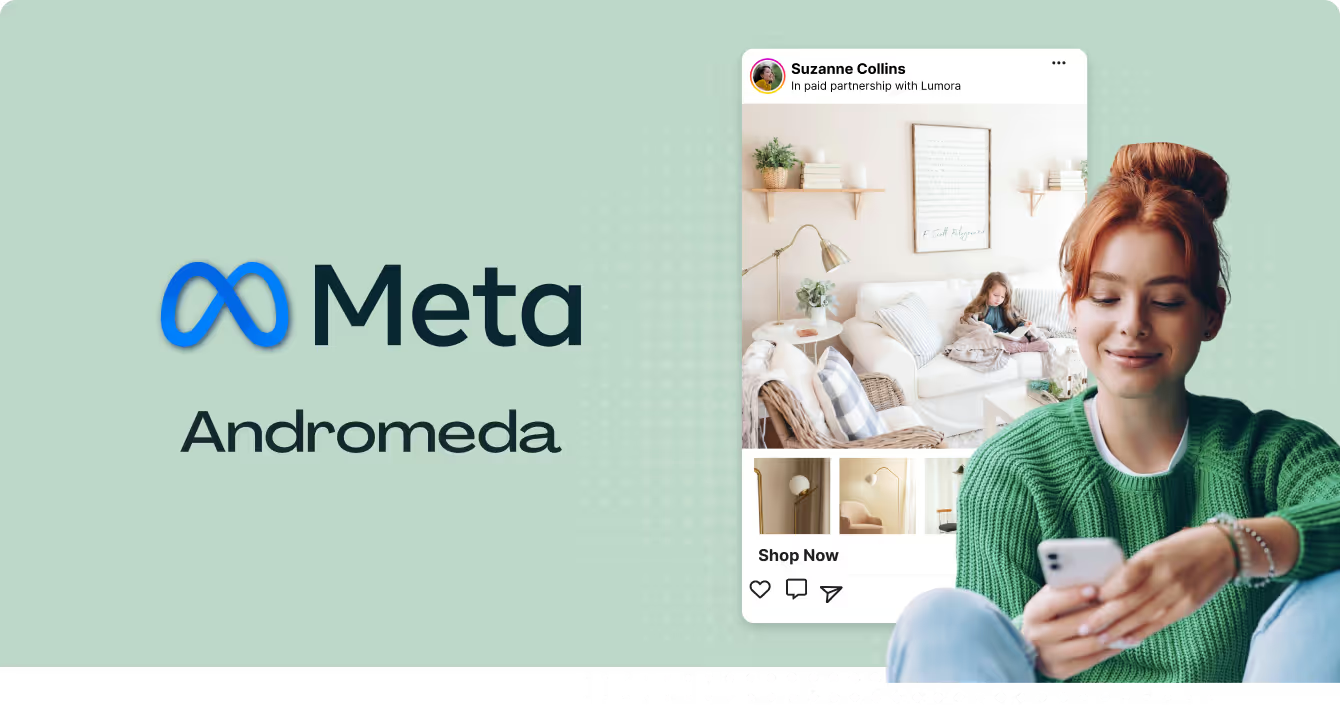
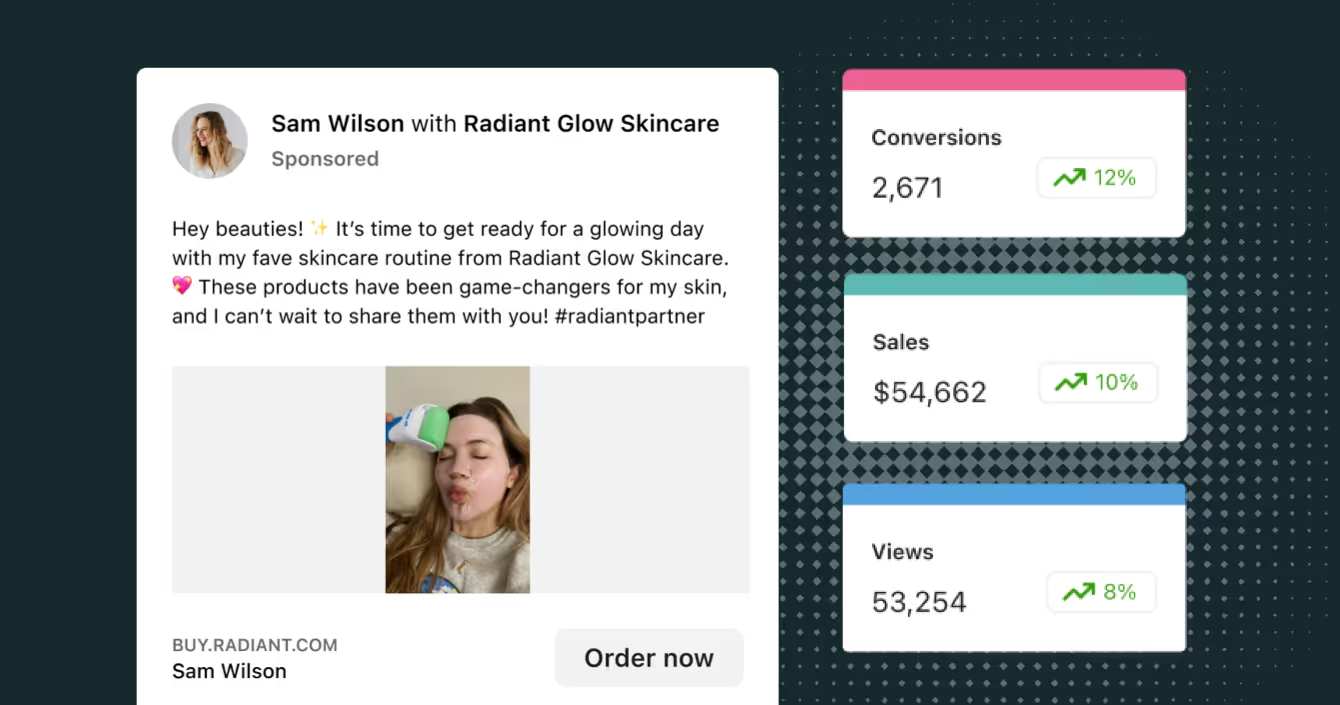
Creator ads are paid placements that run from a creator's own social handle, funded and targeted by the brand. On Meta, they're called Partnership Ads. On TikTok, they're Spark Ads. The ad carries a "paid partnership" label, appears in the feed under the creator's name, and gives the brand full control over budget, targeting, and optimization inside the platform's ad manager.
A standard ad runs from your brand handle with creative your team produced. It looks like an ad, so people scroll past it. On the other hand, creator ads look like content people already choose to watch.
But why do they cost less to run? Because they borrow the creator's trust and social proof. When an ad feels native to the feed instead of interrupting it, audiences stop, watch, and engage. That engagement is what ad platforms reward with cheaper placements.
In fact, brands often see a 53% higher click-through rate (CTR) from influencer-led ads compared to their standard creative, and 69% of brands say influencer content outperforms brand-directed content. In other words, creator partnership ads win because they stack trust, social proof, and performance targeting in a single unit.
If you want a deeper look at the mechanics, our guide on Partnership Ads and how to convert creator content into high-impact paid ads cover the details.
4 core ways creator ads slash your spend
The cost savings come from 4 distinct mechanisms, and each one attacks a different line item in your ad budget. Let’s break it down.
1. Eliminate expensive creative production costs
Traditional ad production is a money pit. Studio time, photographers, models, editors, and revisions add up before a single ad goes live. Then the asset ages, and you do it all again.
Creator-generated content replaces that entire cycle. Creators shoot on their phones, in real settings, with a style their audience already trusts. You get a steady stream of ad-ready assets without the overhead of an in-house production team.
The quality holds up too. UGC videos about a brand are viewed 10x more than official brand videos on YouTube. Creator-generated content delivers both quality and cost savings, and audiences engage with it more than polished brand videos.
2. Reduce media spend with higher-performing creative
Better creative earns cheaper placements. Ad platforms reward relevance, so when creator ads pull higher engagement, your cost per result drops across the board.
The benchmarks are consistent. Creator-attributed paid ads tend to deliver 20-50% lower cost per thousand impressions (CPMs), 30-60% lower cost per clicks (CPCs), and 30-50% lower cost per acquisitions (CPAs) than brand-led creative. On Meta specifically, higher relevance scores translate directly into cheaper ad auctions.
3. Extend creative lifespan and combat ad fatigue
Ad fatigue drains budgets. Audiences stop responding to the same creative, performance dips, and you keep paying for impressions that no longer convert.
Plus, Meta’s ad algorithm favors creative diversity, which means advertisers need a continuous pipeline of creator content to fuel their paid channels. Instead of 1 hero asset running until it dies, you rotate fresh creative constantly and keep campaigns lively.
One piece of content stretches surprisingly far. As we cover in our guide to converting creator content into paid ads, you can pull still images from a video to test as static ads, add text overlays or captions, and cut multiple hooks from a single clip. One creator post becomes 12 ad variations, so your production spend covers far more ground.
4. Align ad spend directly with performance
Creator partnerships can be structured so cost follows outcome. Affiliate links and promo codes inside creator ads track direct sales, so you know exactly which creators and posts drive revenue.
This de-risks your spend. You scale budget behind creators who are proven to convert, and pull back from those who don't. Many e-commerce brands take the smartest performers and move them into affiliate partnerships, paying commissions on sales they actually generate. Your ad budget stops being a bet and starts being an investment tied to results.
5-step blueprint for integrating creator ads into your paid strategy
Here's how to put this into practice, from securing rights to scaling what works.
Step 1: Secure content usage rights from the start
You cannot legally run a creator's content as a paid ad without the right permissions. This is a non-negotiable first step, and the best time to handle it is at the contract stage.
Build these into every creator agreement:
- Which channels the content can run on, across all social platforms
- Duration of usage rights, typically 6-12 months minimum
- Permission for paid promotion and boosting
- Permission to make post-production edits and modifications
Frame it as a collaboration (not a demand). If you already know you want to test a creator's content in ads, negotiate paid usage rights into the brief from day 1. To sweeten the ask, tie usage rights to performance bonuses so creators share in the upside.
Step 2: Identify high-performing organic content to amplify
Organic posts are a free testing ground. Before you put a dollar behind any content, watch how it performs on its own.
Look past likes. Comments, shares, and saves are deeper signals that predict how content will hold up as an ad. A post that people save or send to a friend is telling you it resonates.
This validates creative before you spend, which removes most of the guesswork from your ad budget. If a piece of content earns strong organic traction, that's your cue to boost it.
Step 3: Turn creator content into Partnership Ads and Spark Ads
Now you turn validated content into paid placements. The 2 mechanisms to know:
- Meta Partnership Ads: Instagram and Facebook ads created through a partnership between a brand and a creator, running under the creator's handle with a paid partnership label.
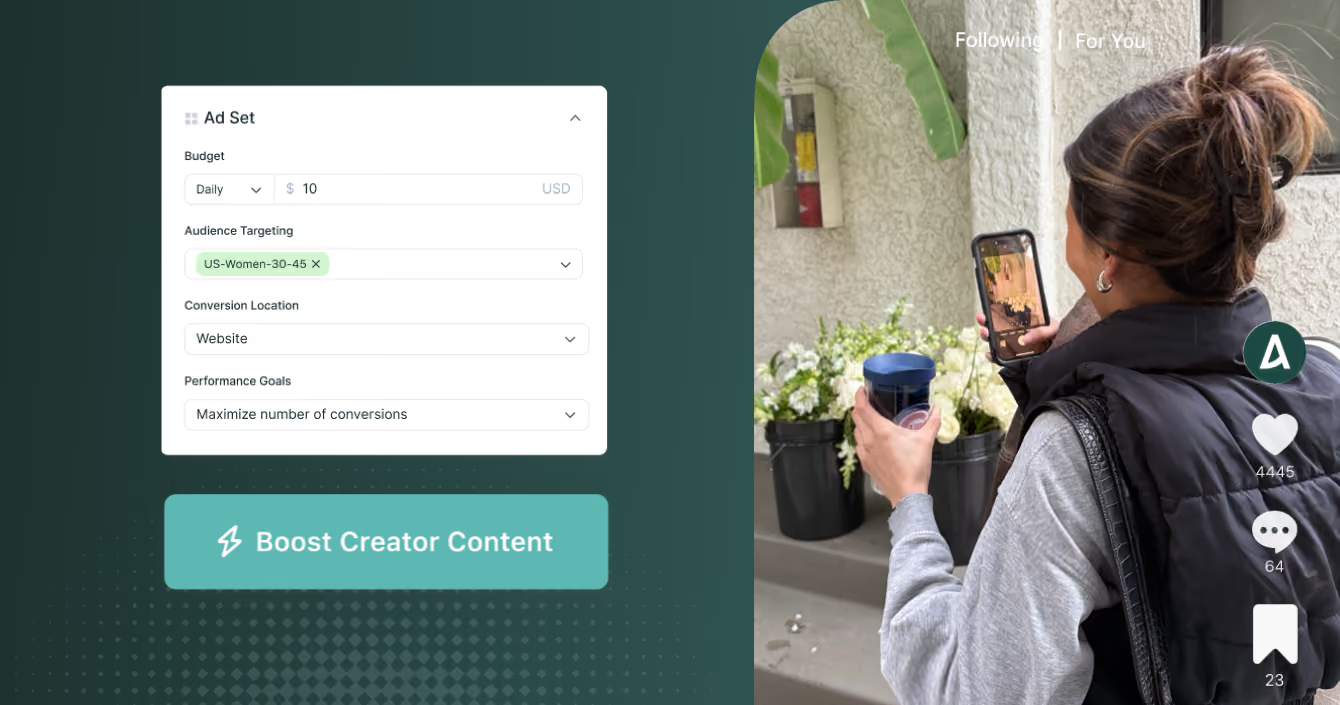
- TikTok Spark Ads: TikTok's version, boosting a creator's organic post as a paid ad while keeping it on the creator's handle.
Both work the same way at their core. The ad runs from the creator's account, combining their authenticity with your targeting power inside Meta Ads Manager or TikTok Ads Manager.
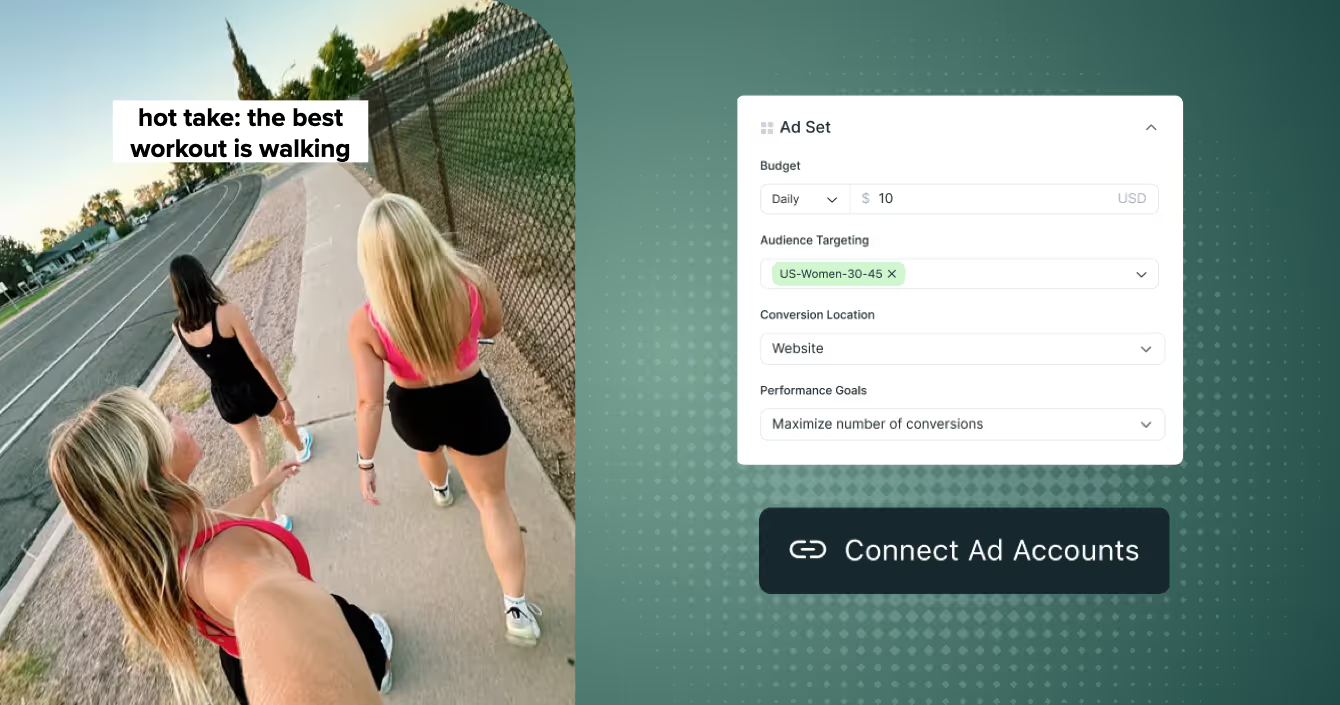
The technical setup involves granting advertiser permissions. On Meta, the creator connects their accounts, sets their profile to a professional account, and toggles on branded content ad permissions, then you send a partnership request from Meta Business Suite, as Meta's own walkthrough shows. Aspire's CreatorAds Suite handles this authentication and permissions flow for you, so you're not chasing creators through settings menus.
Step 4: Systematically test and optimize campaigns
Treat creator ads with the same rigor as any other performance campaign. The content is different, but the discipline shouldn't be.
Start with a head-to-head A/B test: creator content versus your existing brand creative. Run clean tests comparing creator-handle ads to brand-handle ads so you know exactly what the creator angle is worth.
From there, keep testing:
- Different creators, to find your top performers
- Different hooks and opening seconds
- Different CTAs
- Different audiences, including lookalikes built from a creator's followers
Small tweaks and continuous iterations are the secret to success.
Step 5: Measure the KPIs for creator ads
Track the bottom-funnel metrics that prove business impact:
- Return on Ad Spend (ROAS): revenue generated per dollar spent
- Cost Per Acquisition (CPA): what it costs to win a customer
- Conversion Rate: how many clicks turn into sales
- Click-Through Rate (CTR): an early signal of whether creative resonates
Keep in mind that you should set independent KPIs for influencer content performance versus paid media. Judging a creator's organic reach by the same yardstick as a targeted ad campaign will lead you astray.
Tying creator ads to these numbers is what earns you the budget to scale. Our practical blueprint for scaling ads with creator content goes deeper on building this into a repeatable engine.
How to Manage and Scale Your Creator Ad Strategy With Aspire
Doing all of this by hand gets messy fast. Rights tracked in spreadsheets, permissions chased over DMs, and performance data scattered across platforms make scaling nearly impossible.
Aspire pulls the whole process into one platform. You can discover creators, manage usage rights, store every asset in a central Content Library, and launch Partnership Ads directly, all in one place. With first-party integrations with Meta and TikTok, our CreatorAds Suite takes you from brief to boost without exporting assets or juggling logins. It handles creator authentication, advertiser access, and usage rights, then feeds top-performing content and creator insights back into your workflow so you can iterate on higher-converting ads.
The AI reverse image search helps you find creators whose content matches your brand's aesthetic, and automation removes roughly 90% of the manual busywork that usually slows programs down.
The results speak for themselves. Household cleaning brand Purdy & Figg used creator content in paid ads and saw a 78% increase in ROAS. Bone broth brand Kettle & Fire generated over 2,000 pieces of content for Partnership Ads that drove $135K in sales in a few months.
Frequently Asked Questions
What are creator ads and how do they differ from traditional brand ads?
Creator ads are paid placements that run from a creator's social handle while the brand controls the budget, targeting, and optimization. Traditional brand ads run from your own handle with creative your team produced. The difference audiences feel is authenticity: creator ads look native in the feed and carry the creator's trust, so they earn higher engagement and cheaper placements.
What is creator whitelisting and how does it reduce advertising costs?
Whitelisting is when a creator grants a brand permission to run ads through the creator's own account. The ad keeps the creator's identity and social proof while the brand optimizes it inside the platform's ad manager. Because these ads feel authentic, they typically deliver 20-50% lower CPMs and 30-60% lower CPCs than brand-led creative, which lowers your total cost to acquire customers.
What is the difference between Partnership Ads (Meta) and Spark Ads (TikTok)?
They're the same idea on different platforms. Partnership Ads (formerly Branded Content Ads) run on Instagram and Facebook under a creator's handle with a paid partnership label. Spark Ads are TikTok's version, boosting a creator's organic post as a paid ad. Both keep the ad on the creator's account and give the brand targeting and budget control.
How much cheaper are creator ads vs. standard brand ads?
Creator ads consistently outperform brand creative. Brands see roughly 4x higher CTR, a 50% reduction in cost-per-click, and CPAs 30-50% lower than brand-led ads. Meta Partnership Ads specifically drive around 53% higher CTR compared to standard brand ads.
What ROI can brands expect from influencer-powered paid advertising?
Results vary by program, but brands running creator content in paid ads report strong returns, some seeing $5.20 back per $1 spent. Purdy & Figg achieved 78% ROAS increase, and Kettle & Fire drove $135K in sales from Partnership Ads.
How do brands get the rights to use creator content as paid ads?
Secure paid usage rights in the creator agreement, ideally at the contract stage. Spell out which channels the content can run on, the duration of the rights (usually 6–12 months), and permission to boost and edit the content. Then grant advertiser permissions on the platform so the ad can run from the creator's handle.
What tools or platforms help brands run creator ads at scale?
Several platforms support paid amplification. GRIN offers a paid amplification module with creator licensing built in, supporting TikTok Spark Ads and Meta Partnership Ads, with a free 30-day trial and tiered pricing. Upfluence positions itself for e-commerce businesses of all sizes, with pricing reported from $478 per month by third parties. Aspire's CreatorAds Suite handles the full workflow, from creator discovery and rights management to launching and tracking Partnership Ads in one platform.
How does using UGC in paid social extend creative lifespan and reduce production costs?
A single creator asset can be recut into many ad variations: still images pulled from video, different hooks, added captions, and platform-native edits. That means 1 piece of content fuels weeks of testing instead of a single ad, which combats fatigue and spreads your production spend far wider.
What types of brands benefit most from creator ads and how do they start?
E-commerce and direct-to-consumer brands see the strongest results because they can tie creator ads directly to sales through promo codes and affiliate links. To start, collaborate with smaller creators who will create content in exchange for product, secure paid rights, boost your best organic posts, and move top performers into affiliate partnerships.
Bringing It Together
Creator ads cut costs through 4 clear mechanisms: they eliminate production overhead, earn cheaper media placements, extend creative lifespan against ad fatigue, and align spend with actual conversions. Layered on top of 4x higher CTR and lower CPCs, that's a strategy built for the way ad platforms actually work in 2026.
The brands pulling ahead aren't making more ads. They're taking authentic creator content and putting media budget behind what already resonates. That's a smarter, cheaper, and more durable way to grow.
Ready to run creator ads without the spreadsheet chaos? See how Aspire's CreatorAds Suite takes you from brief to boost, and turn your best creator content into your highest-performing paid media.